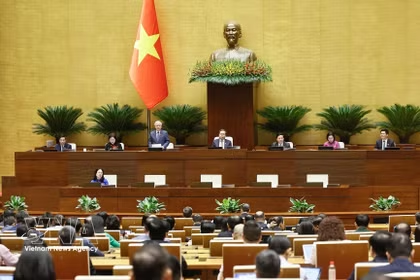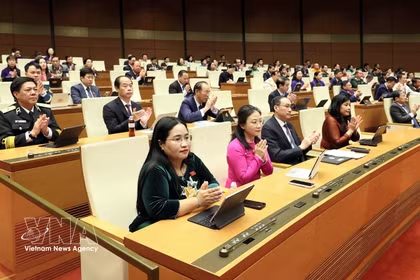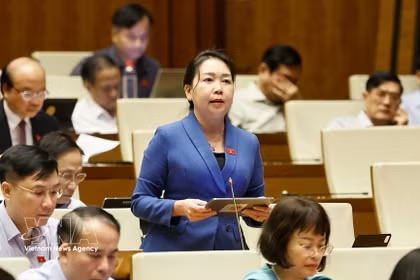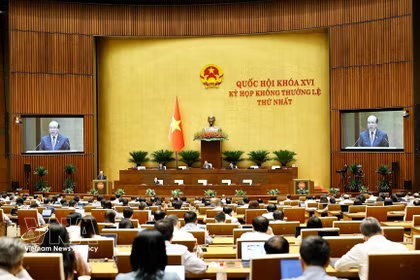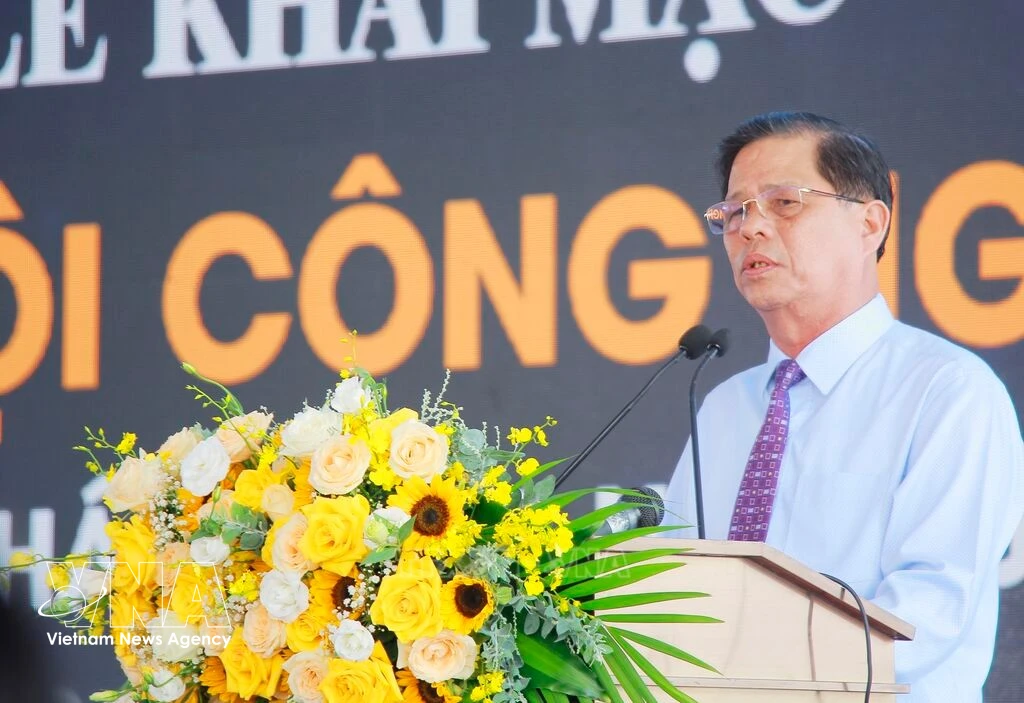
Khanh Hoa (VNA) – Deputies to the 16th National Assembly (NA) and People’s Councils at all levels for the 2026–2031 term should closely link lawmaking with local development realities, thereby helping lay the institutional groundwork for Khanh Hoa to become a centrally governed city before 2030, according to Nguyen Tan Tuan, former Chairman of the provincial People’s Committee and a deputy to the 11th, 12th and 13th legislatures.
Regarding the list of candidates for the 16th NA and provincial-level People’s Councils, which has been publicly posted, Tuan assessed that the structure and composition are well balanced and broadly representative of different social strata.
Following three rounds of consultation at workplaces and residential areas, 20 candidates have been nominated for the 16th NA and 108 for the provincial People’s Council. He voiced confidence that with such a lineup, the quality of operations of the 16th NA and People’s Councils at all levels will be further enhanced, enabling them to fulfill what he described as their historic mission of institution-building for a strong and prosperous Vietnam, while ensuring increasingly secure and happy lives for the people.
On the qualities required of deputies amid efforts to intensify professional legislative activities and exercise supreme oversight, the former Chairman of the provincial People’s Committee stressed that the coming period marks a new era of national development. NA and People’s Council deputies will need to demonstrate strong resolve under the leadership of the Party to effectively implement the Resolution of the 14th National Party Congress.
They are expected to play a leading role in refining the legal system, deciding on major national issues and conducting effective oversight to ensure that Party guidelines and State policies are translated into practice, thereby ensuring every citizen is treated equally before the law and has the right to participate in national development.
He also underlined that legislators should be well-versed in practical realities when building laws and policies. As representatives of the people’s will and aspirations, deputies are expected to remain close to voters, listen attentively and make use of digital platforms and other channels to gather public feedback for NA and People’s Council meetings.
He expressed his hope that the newly elected deputies will contribute to the effective implementation of Politburo Resolution No. 09-NQ/TW dated January 28, 2022, on building and developing Khanh Hoa province through 2030 with a vision to 2045. The ultimate goal, he noted, was to transform it into a centrally governed city before 2030.
According to Tuan, NA deputies elected in Khanh Hoa should reflect local aspirations in socio-economic development, the safeguarding of maritime security and sovereignty, and the establishment of mechanisms conducive to production and business activities. Laws adopted in the coming term must be grounded in real-life conditions and reform requirements as Vietnam enters a new development phase.
Meanwhile, provincial People’s Council members, being closest to the local people, should propose policies aligned with development needs and improvements in living standards, particularly in the context of urban infrastructure expansion in areas such as Phan Rang, Cam Ranh, Nha Trang and Van Phong, he added./.