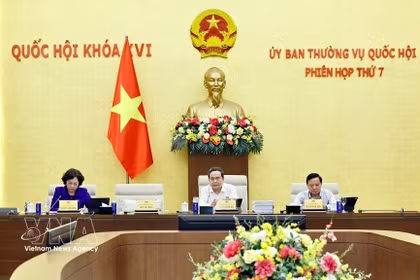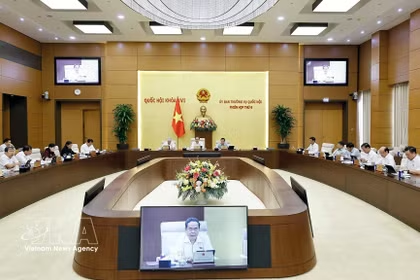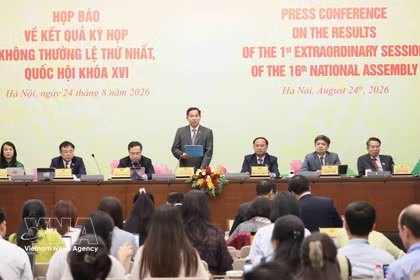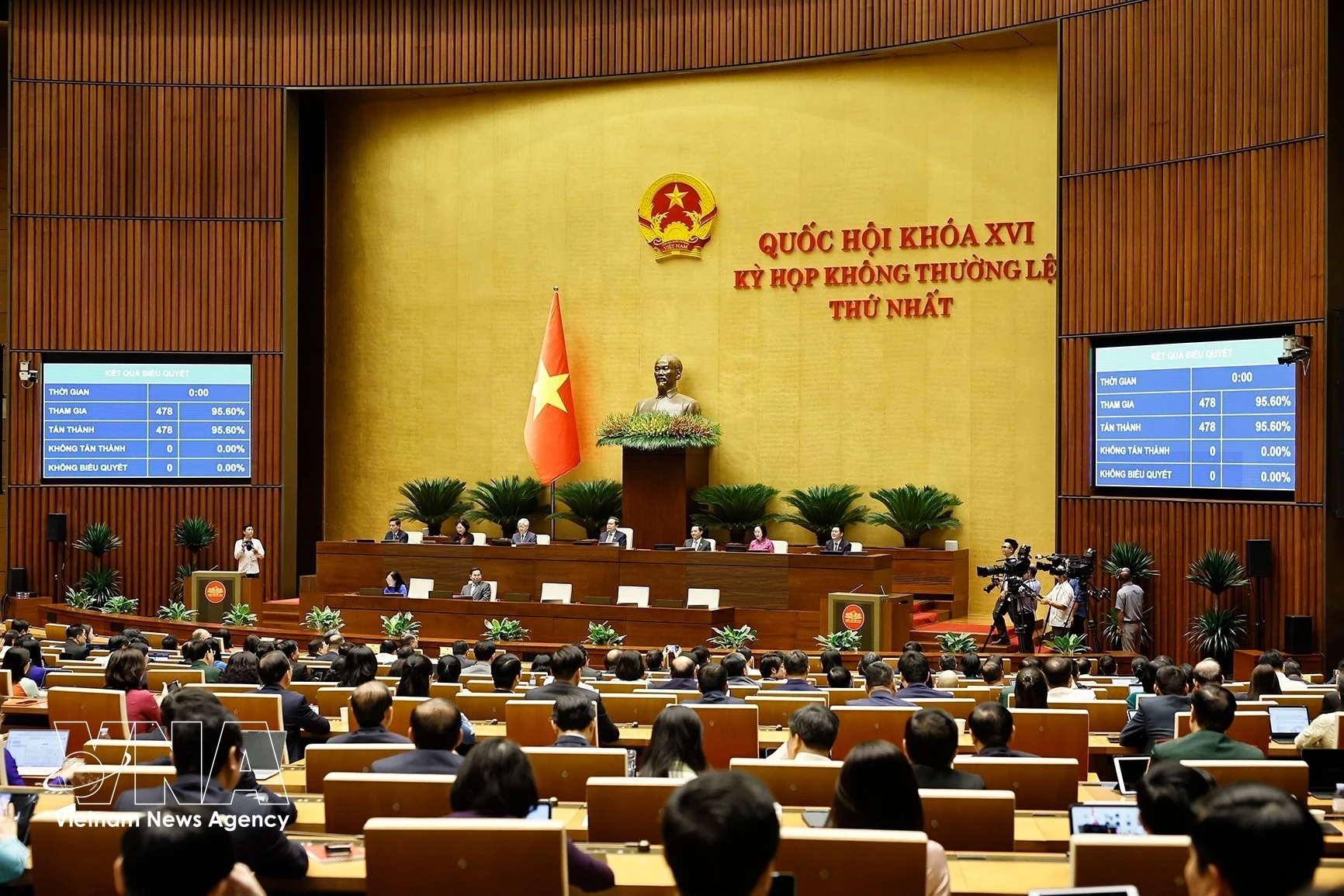
Hanoi (VNA) – Lawmakers, during the 16th National Assembly’s first extraordinary session on August 24, approved a resolution on investment policy for a national target programme on culture, society, rural development, and ethnic minority and mountainous areas for 2026-2035, with 808.5 trillion VND (30.7 billion USD) earmarked for the 2026-2030 period.
The programme consolidates four existing national target programmes covering cultural development; education and training modernisation; new-style rural development, sustainable poverty reduction and socio-economic development in ethnic minority and mountainous areas; and healthcare, population and development.
The programme aims to build modern, prosperous and sustainable rural areas while promoting climate change adaptation, narrowing development gaps and improving living standards, particularly in ethnic minority and mountainous areas.
It also seeks to promote sustainable poverty reduction, ensuring gender equality and social welfare; sustainable rural economic development; preserving ethnic cultural identities; strengthening social security and ensuring national defence and social order, particularly in strategic, border, and island areas.
In the cultural sector, the programme targets comprehensive development of Vietnamese culture and human values, improved access to and enjoyment of cultural activities, and greater investment in cultural development and heritage preservation. It also aims to develop a professional, high-quality cultural and artistic workforce, promote international integration, and enhance the soft power of Vietnamese culture.
For education, the programme focuses on comprehensively standardising and modernising the education and training system, improving quality and expanding equal access to learning and lifelong education. It is also intended to better meet the demand for human resources, particularly highly qualified workers, amid globalisation, technological development, innovation, and digital transformation.
Regarding healthcare and population development, the programme aims to strengthen primary healthcare and disease prevention at the grassroots level, improve population quality, address population ageing, and provide greater care for vulnerable groups.
The programme will be implemented nationwide, with priority given to particularly disadvantaged communes and hamlets, ethnic minority and mountainous areas, former revolutionary bases, border and island areas, and localities facing difficult or extremely difficult socio-economic conditions.
The Government will review the structure of public investment and central budget recurrent expenditure to concentrate investment, avoid fragmentation and maximise savings in recurrent spending, while reserving resources for investment and social security policies.
It will also continue to balance the central budget to provide additional support, including policy credit, in line with budget capacity, implementation progress and the achievement of programme targets and tasks.
At the NA’s early-2030 session, the Government will report on implementation results for 2026-2030 and propose resources needed for the programme’s 2031-2035 period.
The same day, the NA passed a resolution on separating the Ninh Thuan Nuclear Power Project into independent projects and supplementing several articles of the Law on the State Bank of Vietnam, the Law on Anti-Money Laundering, and the Law on Credit Institutions, introducing provisions on anti-money laundering regarding crypto-assets./.