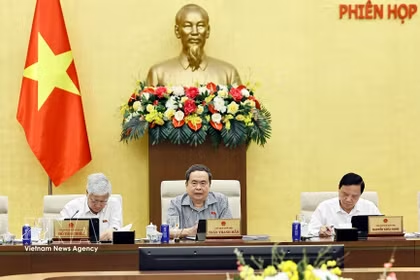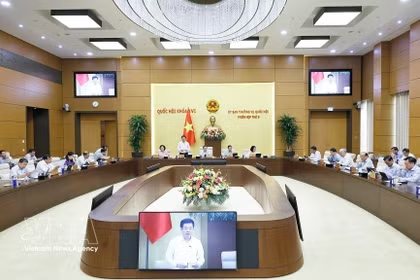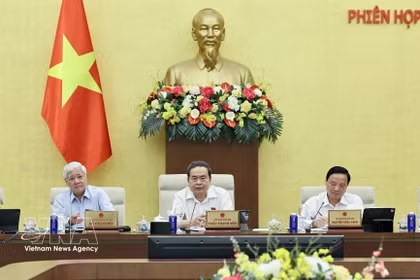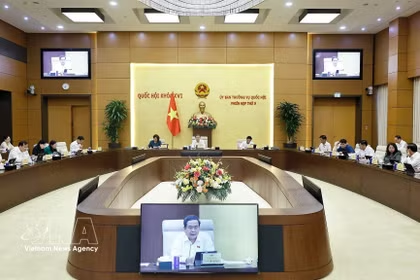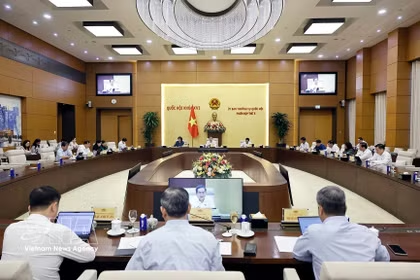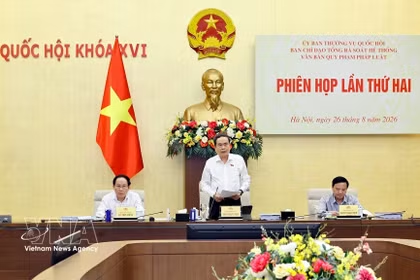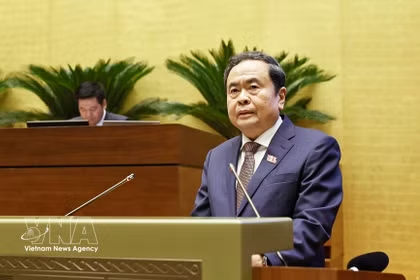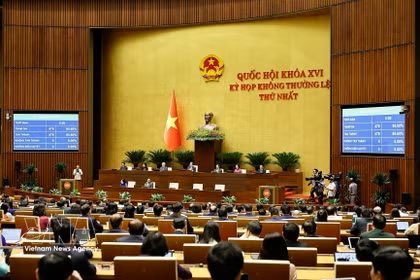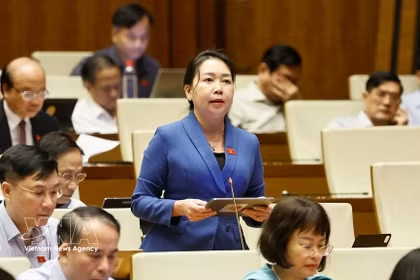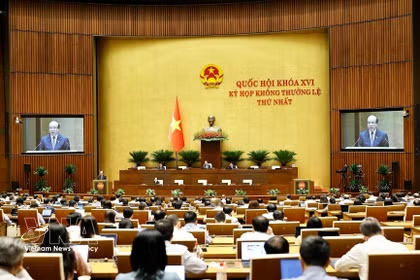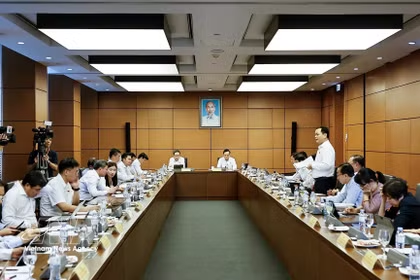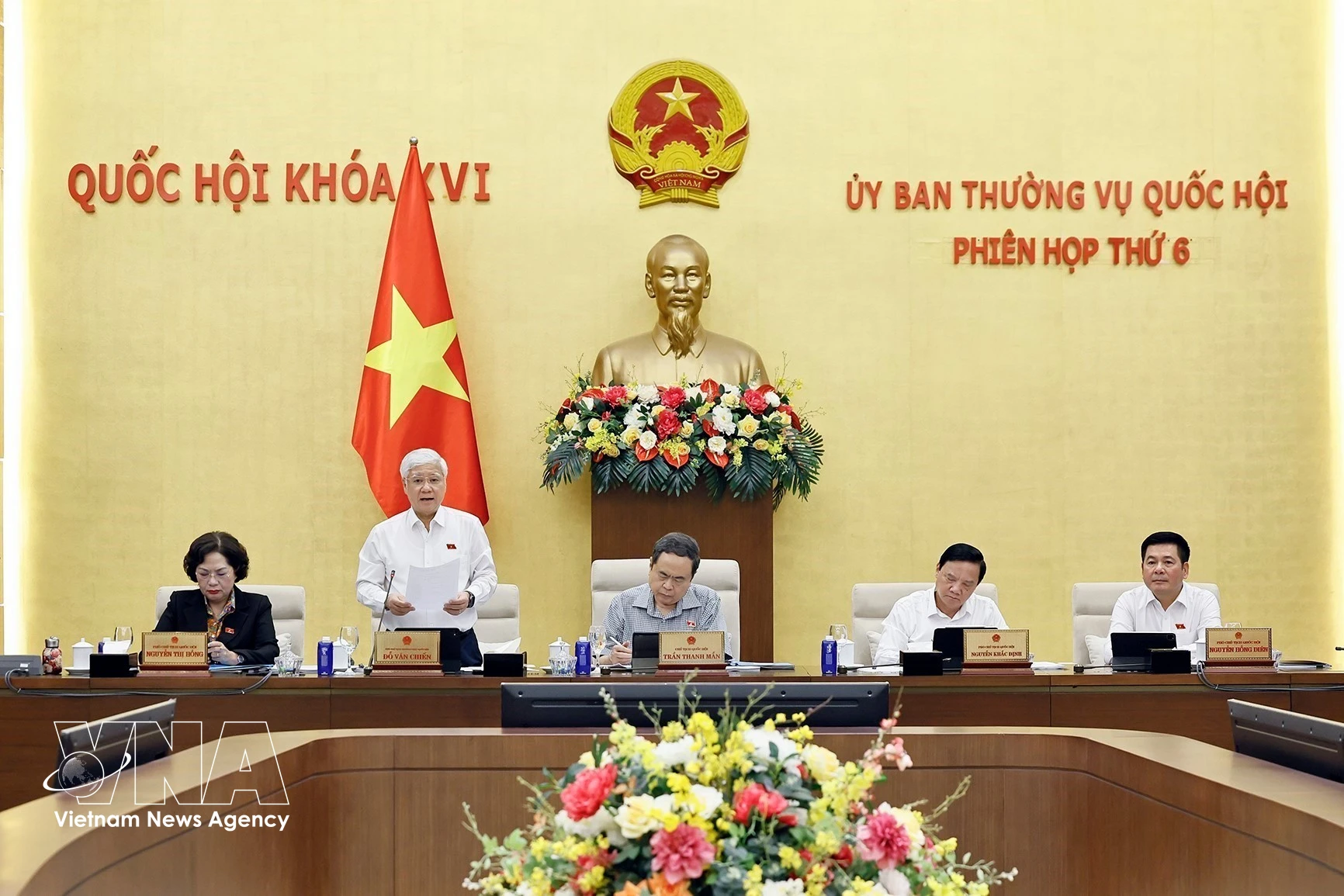
Hanoi (VNA) – The National Assembly (NA) Standing Committee weighed in on a draft Law on Cultural Industry Development during its ongoing sixth session in Hanoi on September 24.
The Government is pushing the bill through a shortened legislative procedure. The draft comprises nine chapters and 53 articles, and is set to be submitted to the 16th NA at its second session this October.
While presenting the Government’s proposal, Minister of Culture, Sports and Tourism Lam Thi Phuong Thanh emphasised the urgency of turning the Politburo’s Resolution 80-NQ/TW, dated January 7, 2026, on Vietnamese culture development into binding law.
The bill aims to complete the legal framework, clear institutional bottlenecks, pool resources and unlock creative potential, while boosting the cultural content of products and services. It's also meant to shield the domestic market and turn cultural industries into a breakthrough growth driver.
It defines the official legal status of cultural industries within Vietnam's economy, spanning film, fine arts, photography, exhibitions, performing arts, music, software, digital content, gaming, advertising, handicrafts, cultural tourism, cuisine, design, fashion, architecture, broadcasting and publishing.
Linking the value chain from creation and production through distribution and consumption is meant to drive breakthrough growth in economic value, boost exports, draw strategic foreign investment, and project Vietnam's cultural identity and soft power abroad, Thanh said.
The bill rests on six policy pillars, including industry-ecosystem development, intellectual property (IP), manpower, infrastructure, market development, and financial policies and investment incentives. It also proposes a regulatory sandbox for new products, services and business models, prioritising film, music, fine arts, cultural tourism, design, fashion, handicrafts, gaming, cuisine and digital content software.
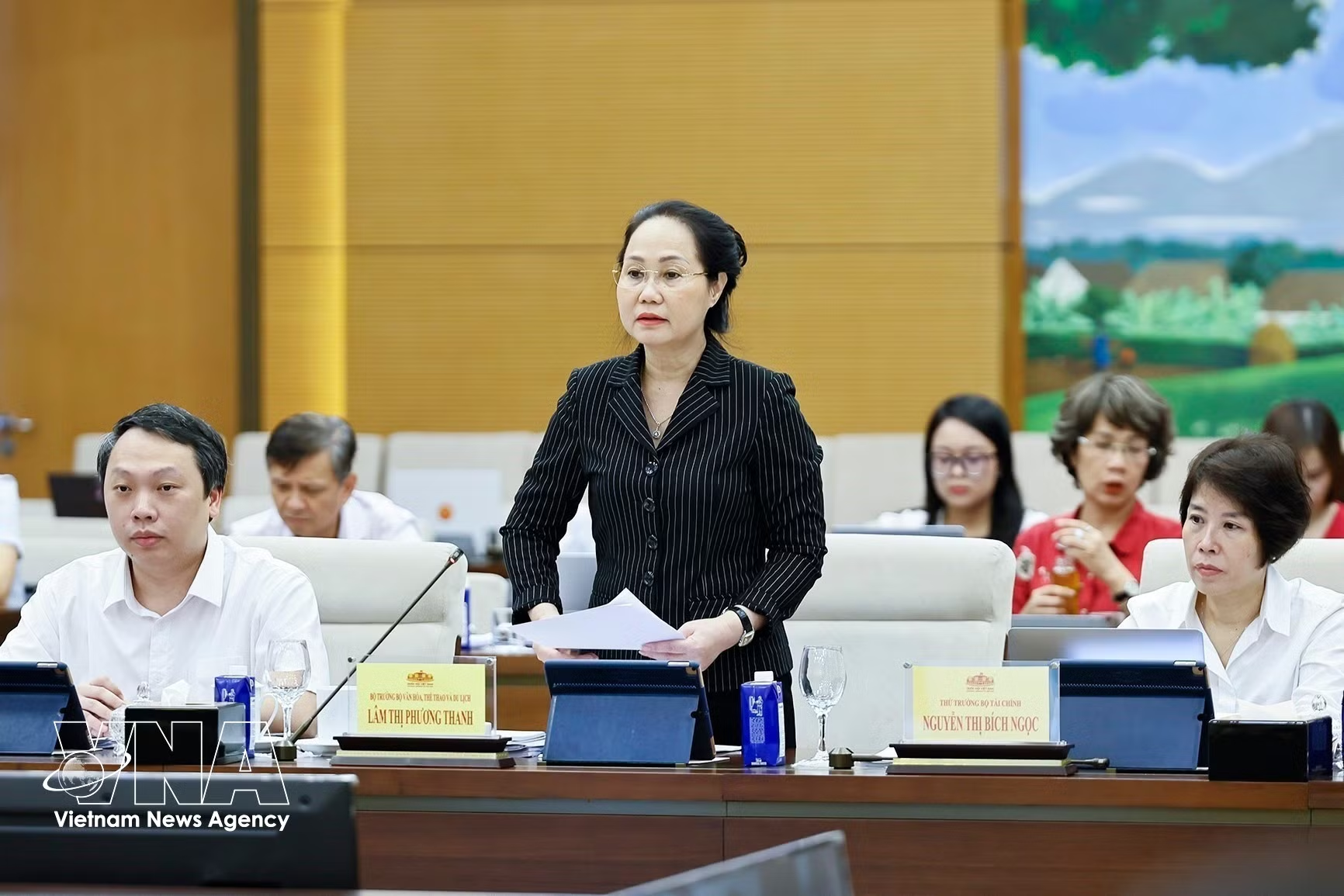
On IP, the minister noted that the law will let cultural-sector assets be pledged as collateral or used as capital contributions in financial transactions, with lenders leaning on valuation certificates and appraisal reports to set values.
Notably, the draft calls for a "cultural industry exchange" to handle trading in cultural products, IP assets and related property rights.
To boost demand for domestic cultural products, the Government is also floating a "National Culture Card", an electronic tool tied to personal ID accounts, for students, revolution contributors, low-income households, those with disabilities and other policy beneficiaries.
To lure talent and investment, the draft proposes globally competitive salaries and bonuses, preferential recruitment and appointment rules, and support for housing, transport and R&D facilities. It also sets a five-year personal income tax exemption for quality cultural-industry personnel and VAT refunds for foreign entities and individuals filming in Vietnam.
While presenting the preliminary appraisal report, Chairman of the NA Committee on Cultural and Social Affairs Nguyen Dac Vinh said the panel’s standing members support the law but urged the ministry to continue reviewing the draft to prevent overlaps with the Law on Education, the Law on Teachers, and the Law on IP.
On the culture card, the committee called for a transparent mechanism that avoids an ask-and-grant system, suggesting the benefits instead be folded into existing citizen ID or student cards.
Vinh said as this is a new law with contentious issues requiring more time for preparation, it should be submitted for discussion at the NA's second session and passed at the third session.
Standing NA Vice President Do Van Chien pushed the drafting agency to work with other bodies to cross-check the bill against the Civil Code, the Law on IP, the Law on Digital Technology Industry, the Law on State Budget, the Law on Investment, the Law on Enterprises and relevant international treaties.
Lawmakers tasked the Committee on Cultural and Social Affairs with finalising the revised appraisal report and coordinating with the drafting agency to gather input at a conference of full-time NA deputies.
During the afternoon session, they also took up a revised draft Law on Food Safety./.