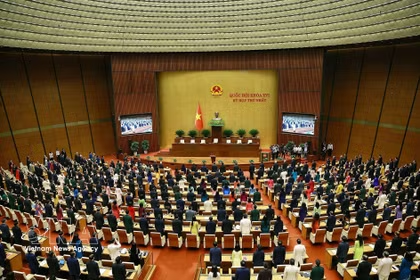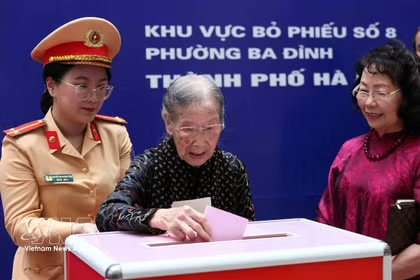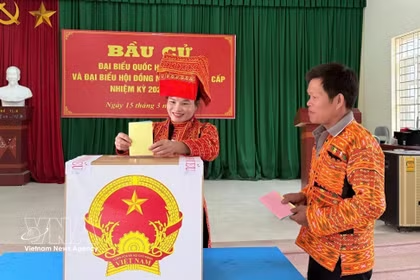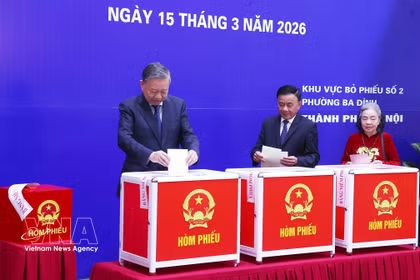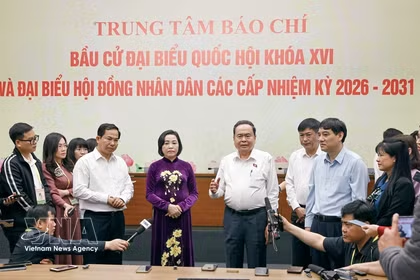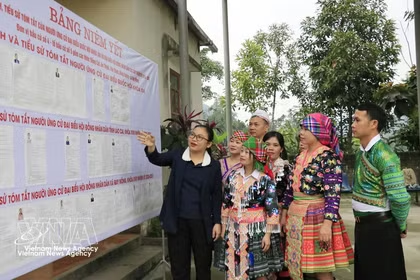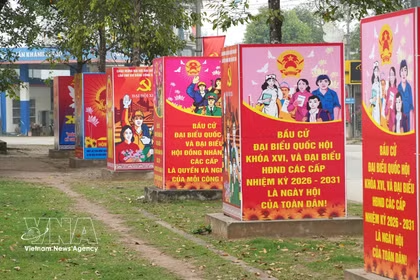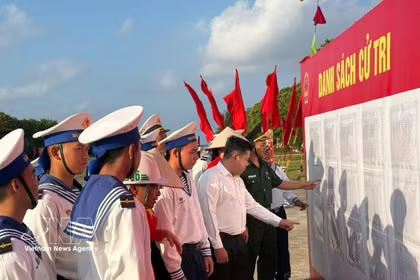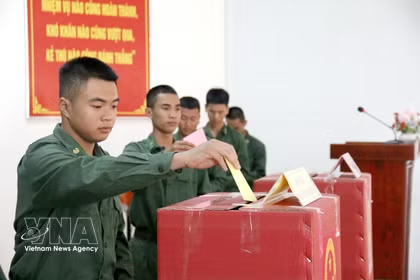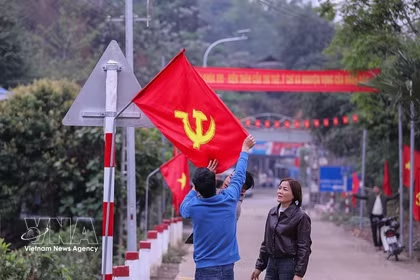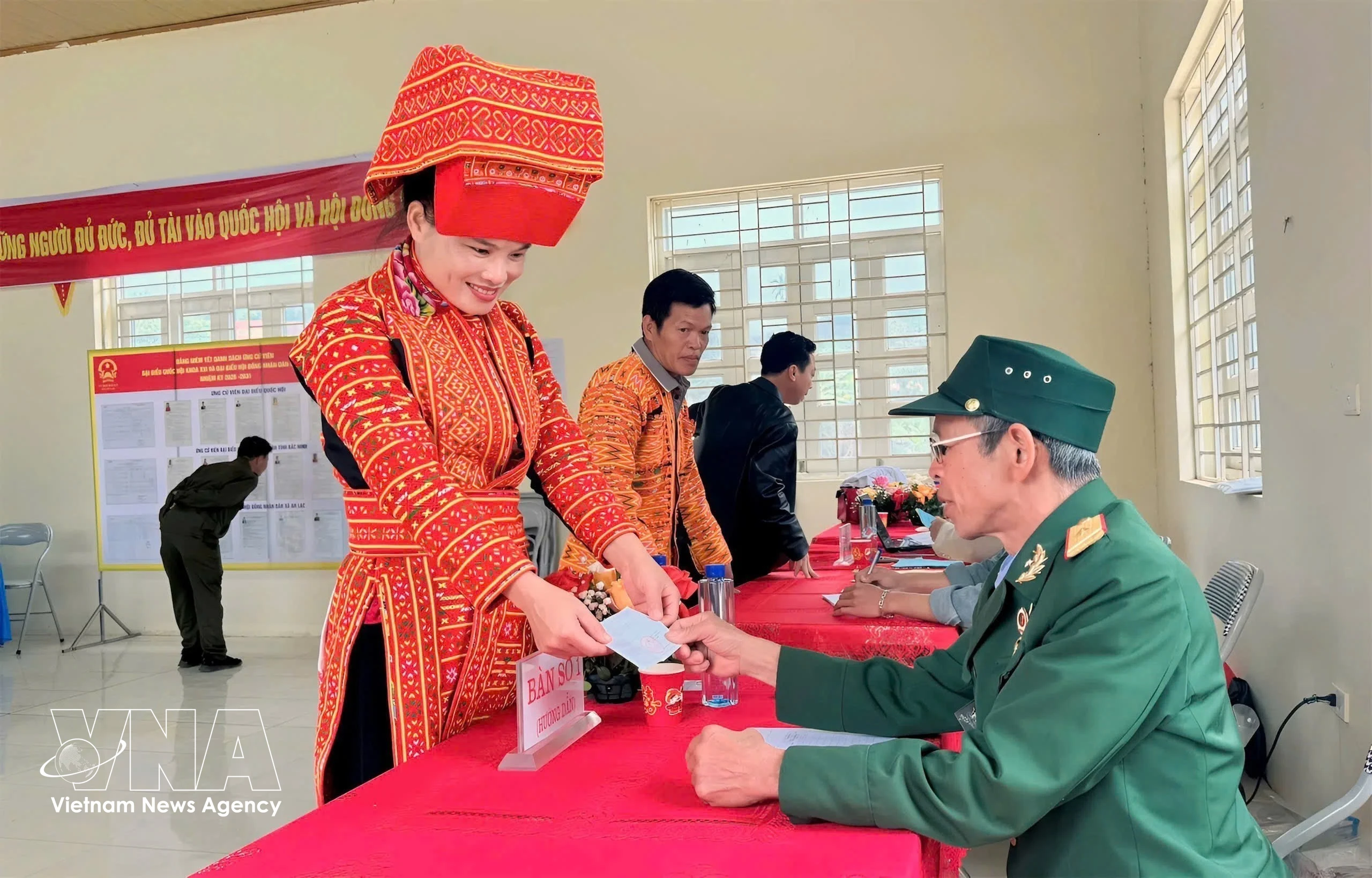
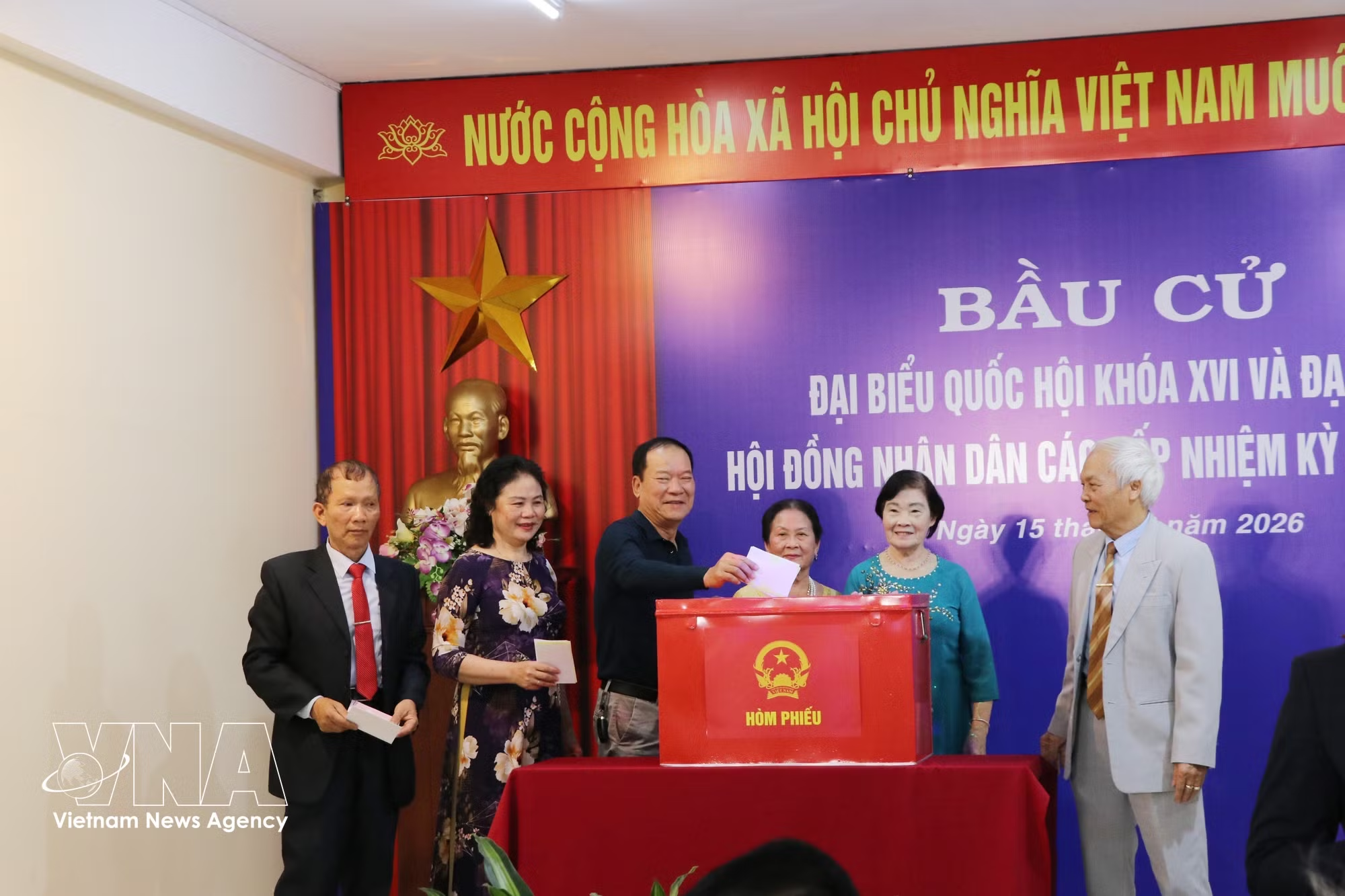
Hanoi (VNA) – The election of deputies to the 16th National Assembly and People’s Councils at all levels for the 2026–2031 tenure, held on March 15, was a resounding success, emerging as a nationwide festival that ensured democracy, equality, legality, safety, thrift and substantive outcomes.
A vivid expression of great national unity bloc
The success of the election was reflected in the full election of 500 deputies to the National Assembly, 2,552 to provincial-level People’s Councils and 72,437 to commune-level People’s Councils, an impressive result that underscores a well-prepared, democratic, and law-compliant personnel process.
In line with the Politburo's Directive No. 46-CT/TW on election leadership, the election ensured a balanced representation of ethnic minorities, women, non-Party members, religious dignitaries, and representatives from intellectuals, workers and farmers.
Notably, for the first time in 16 terms, candidates introduced by central agencies to run in local constituencies achieved the highest-ever success rate, with 214 out of 216 elected. All full-time deputies were elected, while the National Assembly also welcomed, for the first time, a representative from the O Du ethnic group - one of Vietnam’s smallest ethnic communities. The proportion of elected female deputies remained high at 30%.
In his speech at a national conference to launch activities for the election in November 2025, Party General Secretary To Lam emphasised that each ballot cast by voters represents a “vivid symbol of trust.” Eight decades after the first general election in 1946, that spirit remained evident.
More than 76 million voters across 34 provinces and cities nationwide exercised their constitutional rights, from urban centres and rural areas to remote mountainous regions and frontline islands. Voter turnout reached a record 99.7%, reflecting strong public confidence in the Party and State leadership amid new development opportunities shaped by the Fourth Industrial Revolution and lessons accumulated over 40 years of renewal.
The organisation of this election also bore clear marks of digital transformation, with technology applied to voter list verification and real-time monitoring of voting progress, helping enhance transparency, accuracy and convenience.
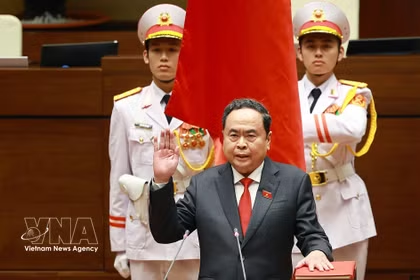
National Assembly Chairman Tran Thanh Man, who also serves as Chairman of the National Election Council, affirmed that the success resulted from the decisive, scientific engagement of the entire political system under the close leadership of the Politburo and the Secretariat, alongside effective coordination between central and local authorities and active participation by citizens.
Fulfilling missions, honouring commitments to voters
One of the most notable outcomes of the election is the improved educational profile of elected deputies. Among the 500 National Assembly deputies, 418 hold master’s or doctoral degrees, raising the proportion to 83.6%, compared with 78.5% in the previous term. Combined with the election of all full-time deputies, this is expected to serve as an important lever for further professionalising parliamentary activities and enhancing legislative quality to meet expectations for breakthrough policy decisions in a new development era.
The election also marked the operation of the two-tier local government model. The successful election of local People’s Council deputies demonstrated progress in administrative reform and organisational streamlining, while reinforcing the role of elected representatives as key intermediaries linking central policies with citizens and helping narrow the gap between policy and practice.
With the Resolution of the 14th National Party Congress identifying comprehensive institutional development as a top priority, the responsibilities facing elected deputies in the coming period are substantial.
Ta Thi Yen, Vice Chairwoman of the National Assembly’s Committee for Deputy Affairs, said that training programmes and professional workshops will be organised to equip deputies with legislative, supervisory and voter engagement skills, alongside the provision of necessary information and working conditions to enable them to quickly adapt and effectively fulfil their duties.
In his article “The National Festival and the Great Responsibility Before the People,” General Secretary Lam stressed that deputies must stay closely connected with the dynamic realities of the renewal process. Each vote entrusted by voters represents not only delegated authority but also expectations for better living standards, transparent laws and the removal of institutional bottlenecks.
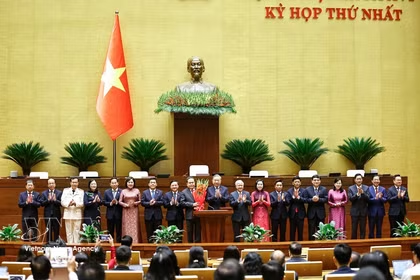
The successful election has created new momentum for the entire Party, people and armed forces to advance firmly into a new development phase. The first session of the 16th National Assembly, scheduled to convene soon, will consolidate key State leadership positions and adopt the legislature’s action programme for the full tenure, requiring strong unity and a high sense of responsibility from all deputies.
At the fifth meeting of the National Election Council held on the afternoon of March 21, National Assembly Chairman Man stressed that elected deputies must fulfil their mission and honour their commitments to voters and the people.
Held on the occasion of the 80th anniversary of Vietnam’s first general election, the 16th election continued the nation’s democratic legacy and reaffirmed the strength of great national unity.
As the country enters the pivotal 2026–2031 period, aimed at realising its two centenary strategic goals amid ongoing administrative restructuring and implementation of a two-tier local government model, the success of the March 15 election provides a solid foundation and renewed momentum for effectively implementing the Resolution of the 14th National Party Congress./.