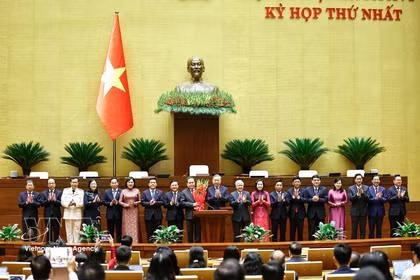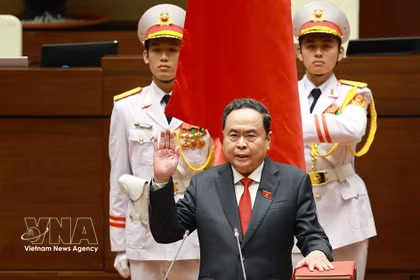
Ho Chi Minh City (VNA) – The completion of leadership restructuring following the 14th National Party Congress and the election of the 16th National Assembly marks the start of a new policy cycle in Vietnam. Analysts say political stability and clearer reform orientations are laying the foundation for the country’s next growth phase while reinforcing investor confidence amid global uncertainty.
Shaping a new policy cycle
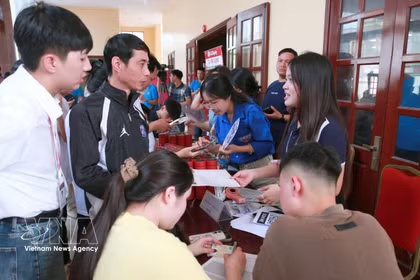
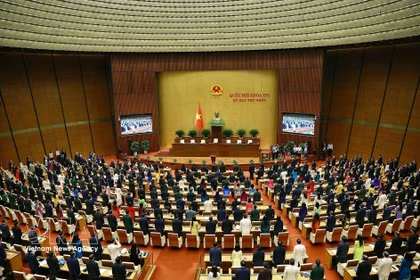
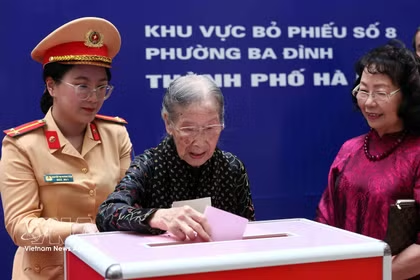
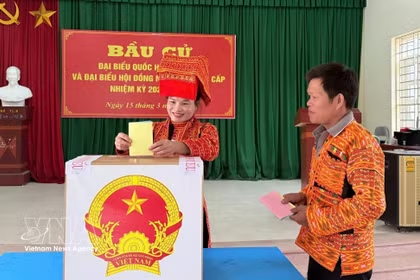
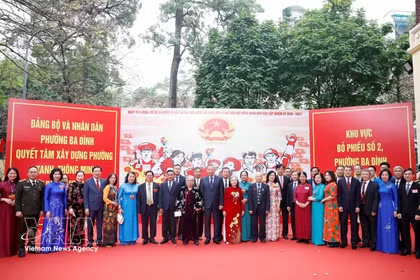
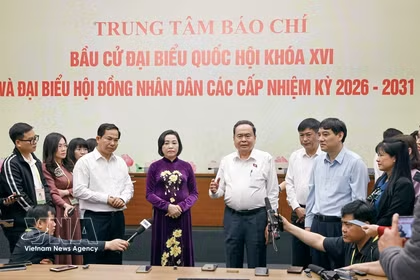
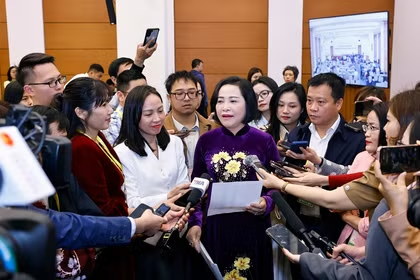
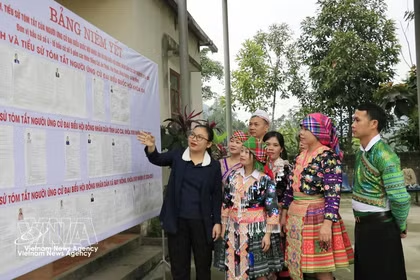
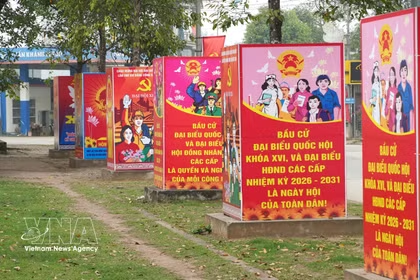
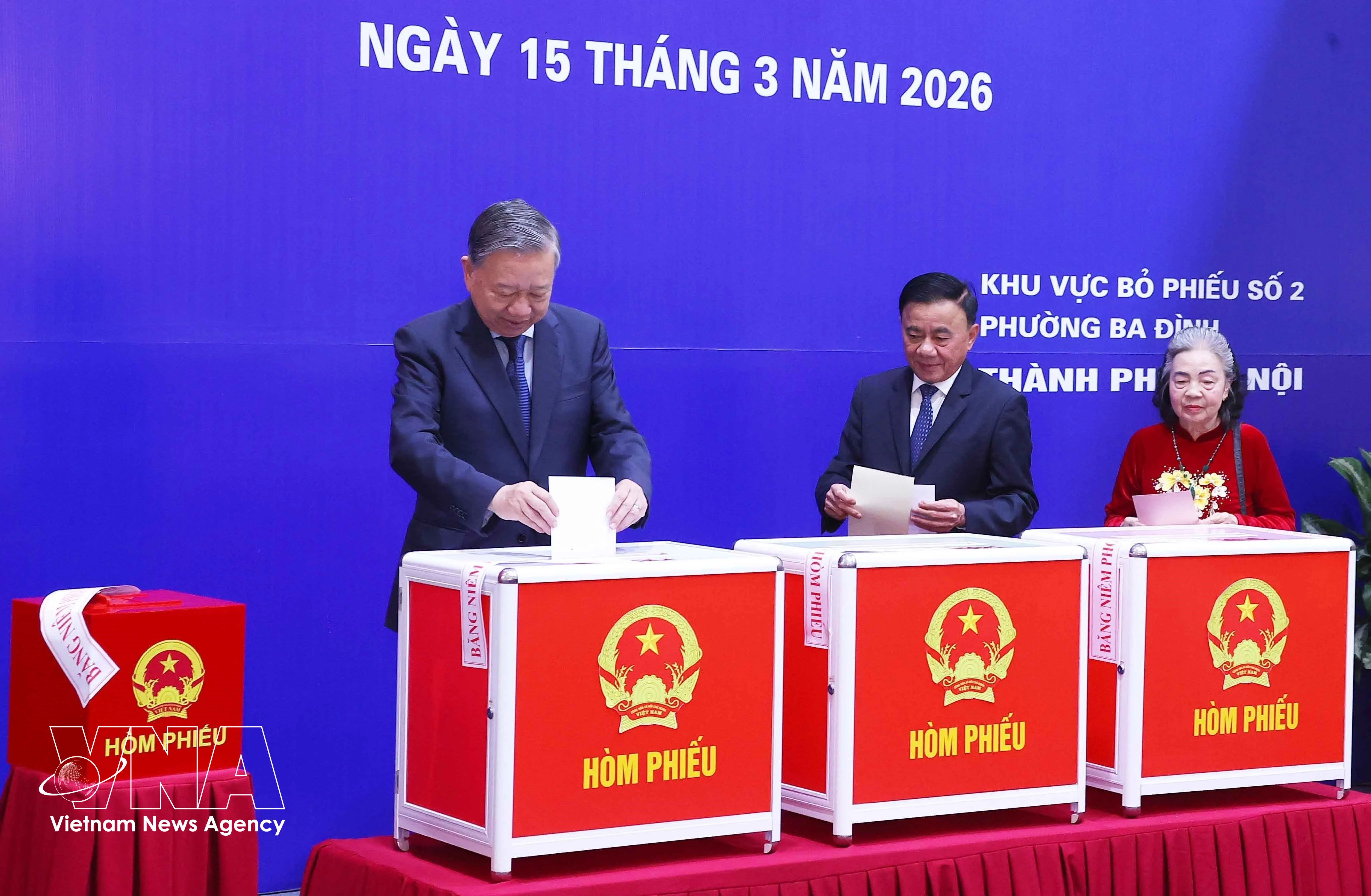
On March 15, nearly 79 million voters cast their ballots to elect deputies to the 16th National Assembly and People’s Councils at all levels for the 2026–2031 term, completing the consolidation of the leadership apparatus shortly after the 14th National Party Congress.
Analysts noted that the close timing of these milestones helped quickly stabilise governance structures and clarify policy direction at the beginning of the new development cycle. Continuity in governance is viewed as a key factor supporting investor confidence, with international organisations expecting Vietnam to maintain its economic reform trajectory.
Policies aimed at removing economic bottlenecks and fostering new growth drivers, including infrastructure investment, institutional reform and capital market development, are expected to be implemented consistently to support both short-term recovery and long-term expansion.
A series of Politburo resolutions, notably Resolutions No. 68 on private sector development and No. 79 on improving state economic efficiency, are shaping a more synchronised policy framework toward a transparent and competitive economic ecosystem. While the State sector retains a leading role, the private sector is encouraged to become a stronger growth engine, supporting Vietnam’s goal of achieving upper-middle-income status by 2030 and high-income status by 2045.
The Government is also addressing bottlenecks in the real estate sector to help restore market confidence and sustain growth momentum.
Global volatility, stable outlook for Vietnam
Geopolitical tensions in the Middle East have driven oil price volatility and global market fluctuations, while trade faces pressures from strategic competition and protectionism. Nevertheless, international institutions believe Vietnam remains well positioned to expand exports and attract foreign direct investment (FDI), supported by competitive costs, supply chain integration and policy stability.
Experts view current geopolitical shocks as cyclical rather than long-term risks. Manufacturing activity is improving, exports are recovering, and FDI disbursement remains stable.
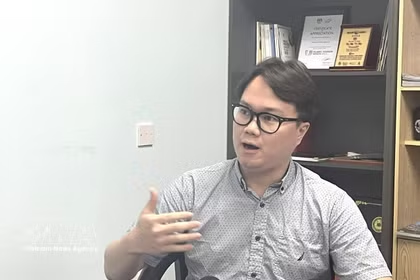
At the Gateway to Vietnam programme organised by SSI Securities Corporation, Barry Weisblatt said international investors largely see geopolitical risks as global in nature and continue seeking portfolio opportunities rather than withdrawing capital.
Singapore-based UOB Bank maintains a positive outlook, projecting Vietnam’s GDP growth at 7.5% in 2026 after expansion of 8.02% in 2025, driven by infrastructure investment, export-oriented manufacturing and sustained FDI inflows.
The Republic of Korea’s firm KIM Vietnam Fund Management also assessed that direct impacts from Middle East tensions are limited, as trade exposure to the region remains modest. Long-term growth drivers continue to come from public investment, production expansion, exports and recovering domestic consumption.
Analysts cautioned that external risks, including potential global tariffs and energy price volatility, require monitoring. However, political stability and a clear reform agenda remain key anchors for investor confidence.
Following the election and completion of the two-tier local governance structure, investors expect policy priorities to focus on improving the investment environment, strengthening implementation efficiency and accelerating institutional reforms. Greater transparency, administrative simplification and consistent policy enforcement are seen as essential to sustaining Vietnam’s attractiveness in the new growth cycle./.