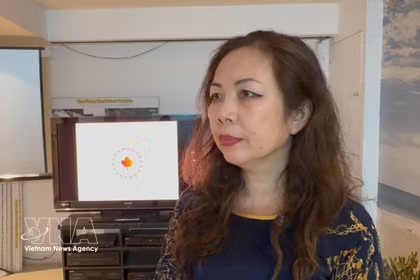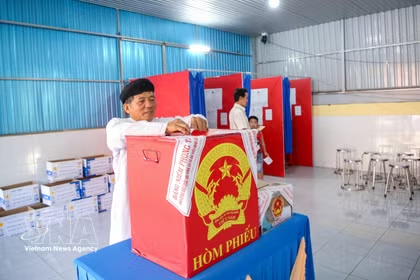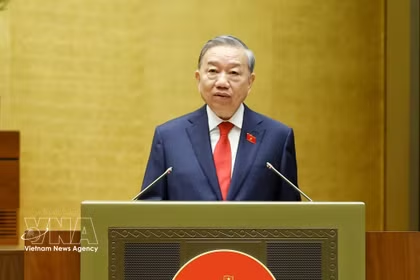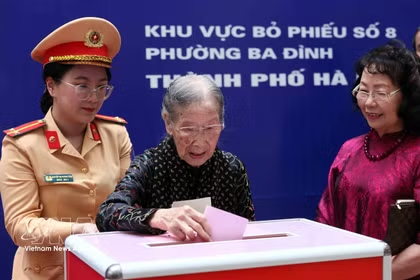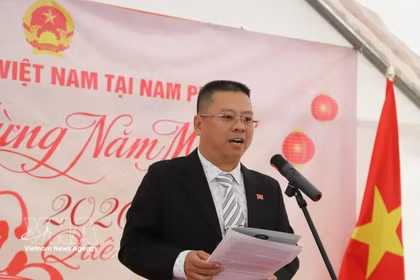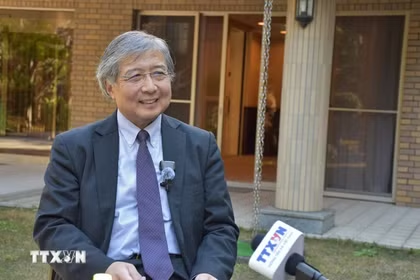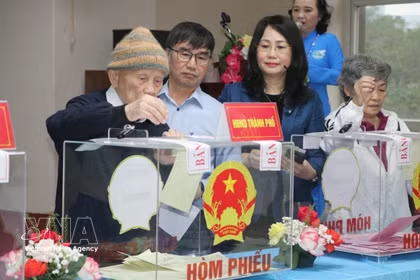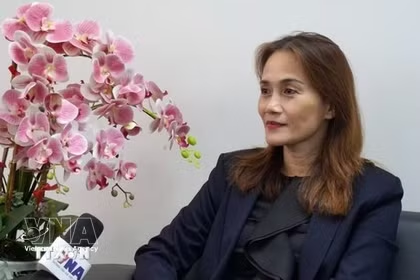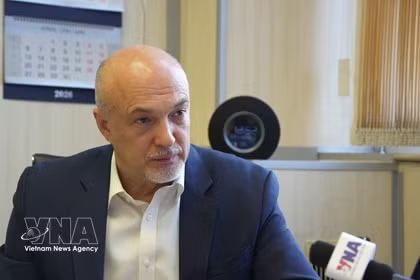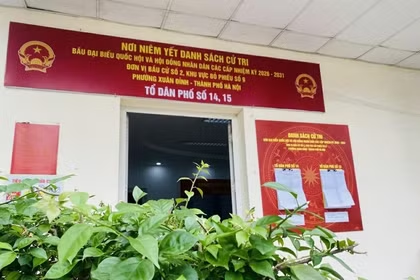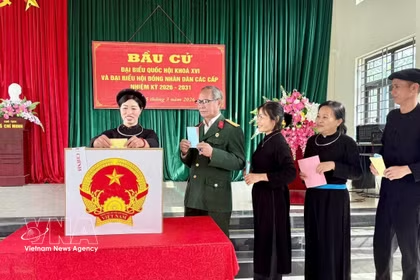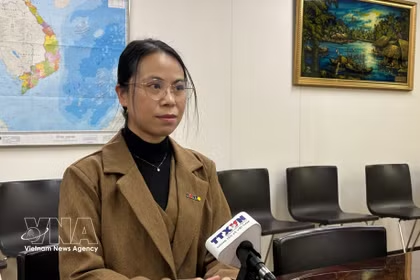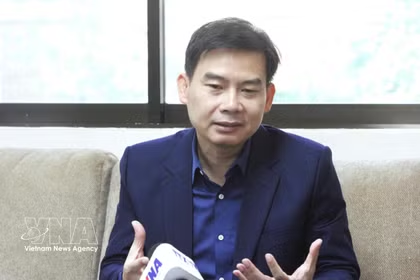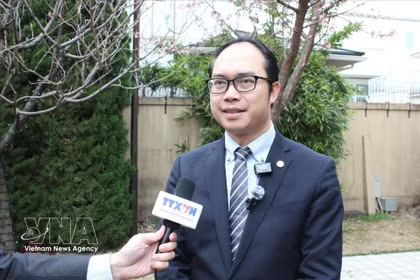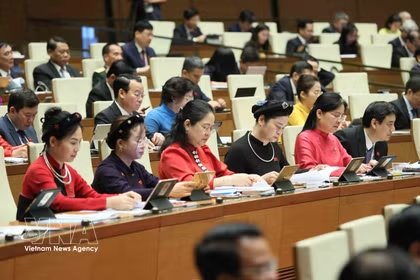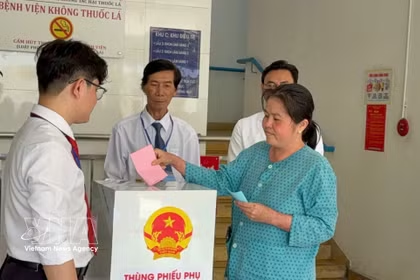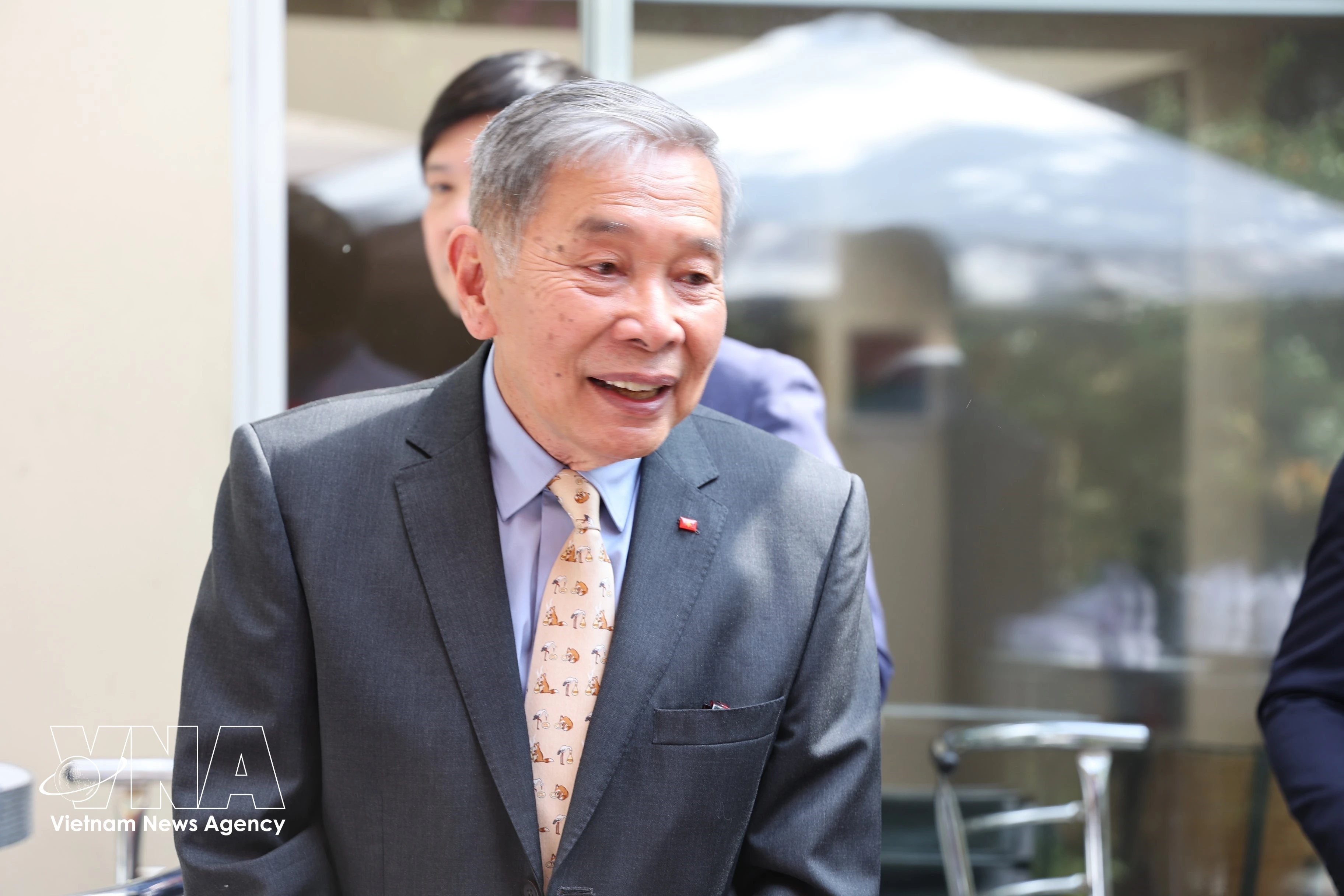
Mexico City (VNA) – President of the Vietnamese Association in Mexico Nguyen Huu Dong has put forward proposals to improve the National Assembly (NA)’s operational efficiency as Vietnam gears up for the election of deputies to the 16th NA and People’s Councils at all levels for the 2026–2030 tenure.
Talking with Vietnam News Agency correspondents in Mexico City, Dong pointed to important strides in the NA’s outgoing tenure, including improvements to the institutional framework, operating methods and stronger oversight of major national issues. In his view, the NA has increasingly asserted its role as the highest representative body of the people and a central pillar in the process of building a socialist rule-of-law state.
Drawing on decades of international experience, including becoming the first Vietnamese official introduced by the Government to serve at the United Nations in the early 1980s and undertaking election observation missions in more than 40 countries, Dong noted that Vietnam's overseas community, numbering more than six million living, studying, and working abroad, represents not only a vital economic and intellectual source but also “an inseparable part of the nation”.
He therefore suggested that Vietnam consider mechanisms enabling Vietnamese citizens living abroad to join the election, and, further ahead, have overseas Vietnamese (OV) representatives in the legislature. Such a step would better reflect the OV’s aspirations and protect their legitimate interests.
According to him, many countries have successfully adopted models reserving legislative seats for expatriate citizens, a practice that foster ties with the homeland and better harness the knowledge and international experience of overseas communities in policymaking.
Dong underscored the NA’s important role in translating the Party’s strategic resolutions into action, particularly in the process of building and refining the legal system to align with Vietnam's development trajectory in the new phase.
As Vietnam pursues the goal of becoming a high-income developed economy, Dong advocated for a legal system that remains long-term and stable while retaining sufficient flexibility to respond to rapid global changes. Individual laws, he said, should address immediate needs while paving the way for future trends such as digital economy, artificial intelligence, green transition, and global governance.
He also suggested expanding policy consultation mechanisms, including greater engagement with Vietnamese experts abroad, to incorporate diverse viewpoints and bring legislation closer to international standards.
From a foreign-relations standpoint, Dong highlighted the growing significance of parliamentary diplomacy in a changing global landscape. Intensifying inter-parliamentary ties and active participation in multilateral parliamentary forums would enable Vietnam to share legislative expertise, project a positive national image, and cultivate an international environment conducive to its development. Concurrently, aligning domestic legislation with international norms would enhance transparency and bolster confidence among global partners, he said.
He believed that preparations for the upcoming election would continue to affirm the vitality of socialist democracy in Vietnam./.