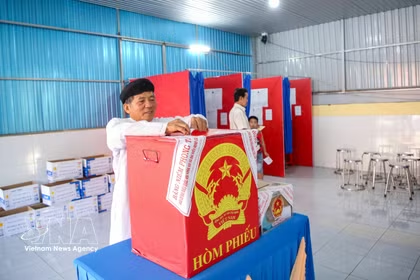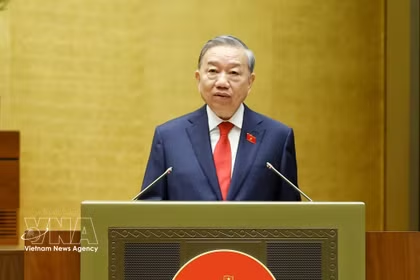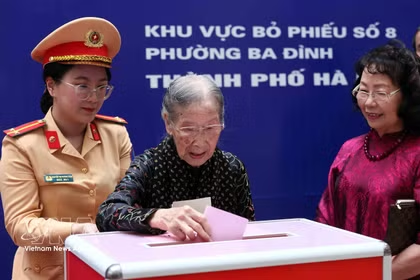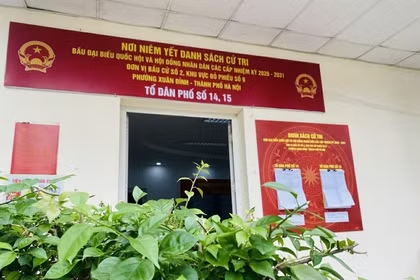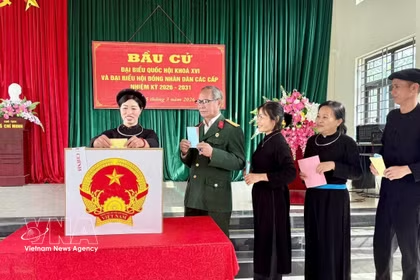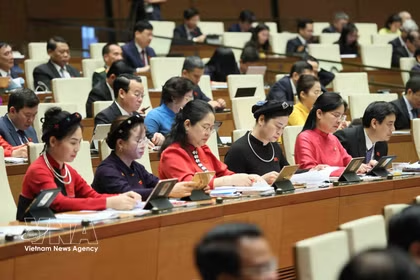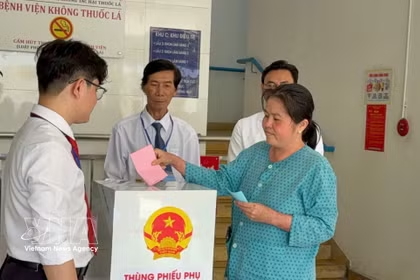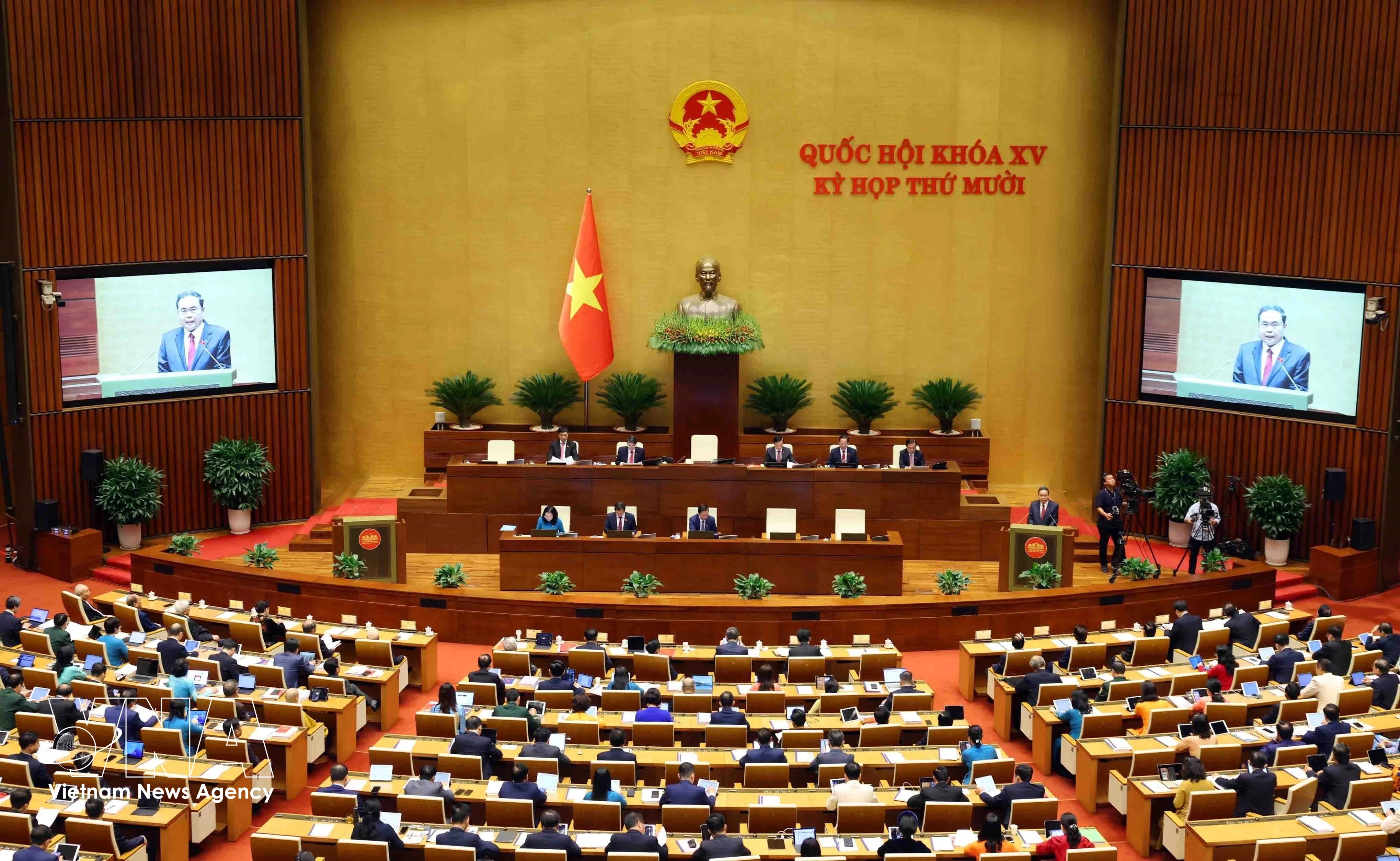
Paris (VNA) – Vietnam’s 15th National Assembly and People’s Councils at all levels for the 2021–2026 term have left clear marks through their intensive activities, legislative innovation and improved oversight. However, in the country’s new stage of development, their performance needs to be further enhanced to become more solid, in-depth and effective.
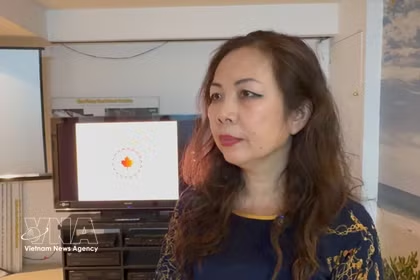
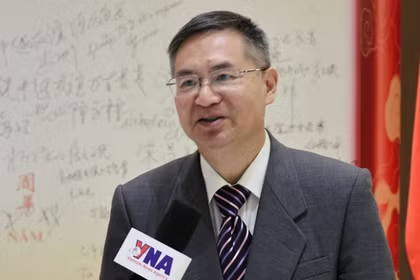
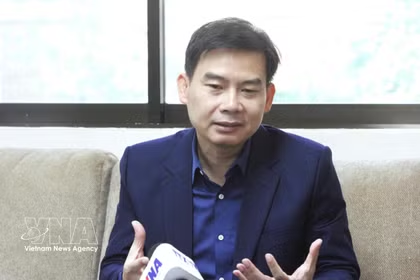
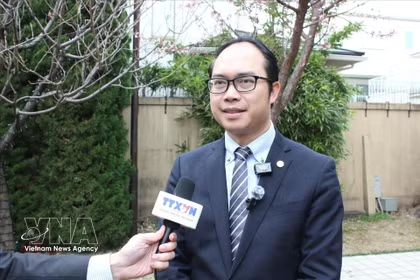
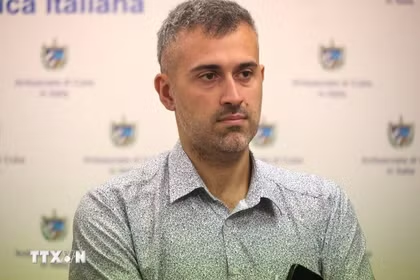
This assessment was shared Le Van Tranh, a Vietnamese doctoral researcher in law at Paris Panthéon-Assas University in France.
Tranh, who is also a lecturer at the Ho Chi Minh City University of Law, said that deputies in the new term will need to meet several key requirements, including strong political integrity, sound institutional thinking and the capacity to translate policies into feasible laws and resolutions. They should also enhance oversight by closely monitoring the implementation of commitments, remain closely connected with the public and businesses, and develop an open and adaptive mindset toward emerging issues such as the digital economy, artificial intelligence and data security.
With regard to People’s Councils, the requirements are particularly specific, notably improving the quality of policy decisions at the local level and strengthening oversight in key areas such as public investment, land management, budgeting, administrative reform and the accountability of the administrative apparatus.
Beyond domestic legislative and supervisory functions, he emphasised that inter-parliamentary cooperation should be elevated to a new level. With relations established with more than 140 parliaments worldwide and over 50 friendship parliamentarians’ groups, Vietnam now has a solid foundation to deepen collaboration. The key challenge, he said, is to ensure that parliamentary diplomacy moves beyond delegation exchanges to become a practical channel that directly contributes to national development.
Accordingly, inter-parliamentary cooperation should be closely aligned with the country’s development priorities, including institutional reform, trade and investment, digital transformation, green transition, energy security, high-quality human resources development and the implementation of international commitments. At the same time, there should be a stronger shift from general exchanges to in-depth sharing of legislative experience among specialised committees, advisory bodies and friendship parliamentarians’ groups, thereby drawing lessons that can be translated into concrete policies and laws.
Another important requirement is to strengthen the capacity to monitor and supervise the implementation of signed agreements and commitments, ensuring that parliamentary diplomacy does not stop at declarations or formal agreements but produces tangible outcomes that contribute to development.
According to Tranh, legislative diplomacy becomes more effective when it enables Vietnam to learn from good practices, mobilise resources, safeguard national interests and enhance its voice at multilateral forums. The key is to move from a mindset of “participating for presence” to “participating for making contributions,” thereby helping shape cooperative norms while directly serving the country’s development goals.
Vietnam can also learn valuable lessons in organising legislative and parliamentary activities from France, he stressed, adding that what should be learned is not the replication of institutional models, but rather the organisation of a rigorous, professional lawmaking process that ensures accountability throughout. Developing parliamentary diplomacy in a more substantive manner, closely linked with learning legislative experience and sharing technical expertise, is also an important direction for directly supporting the country’s development./.