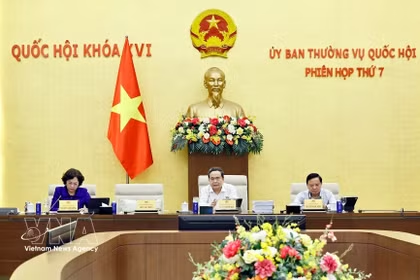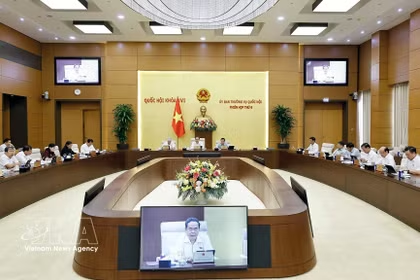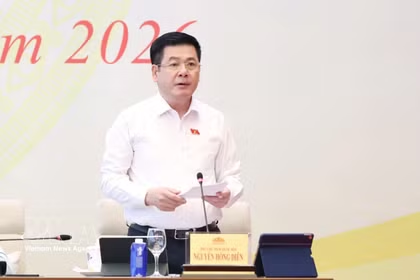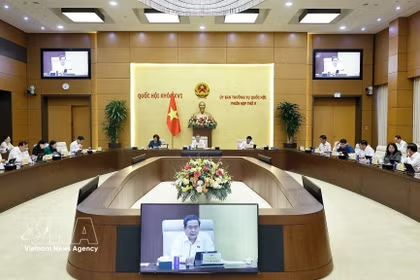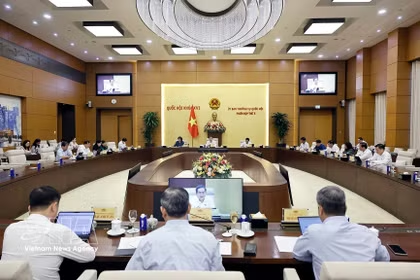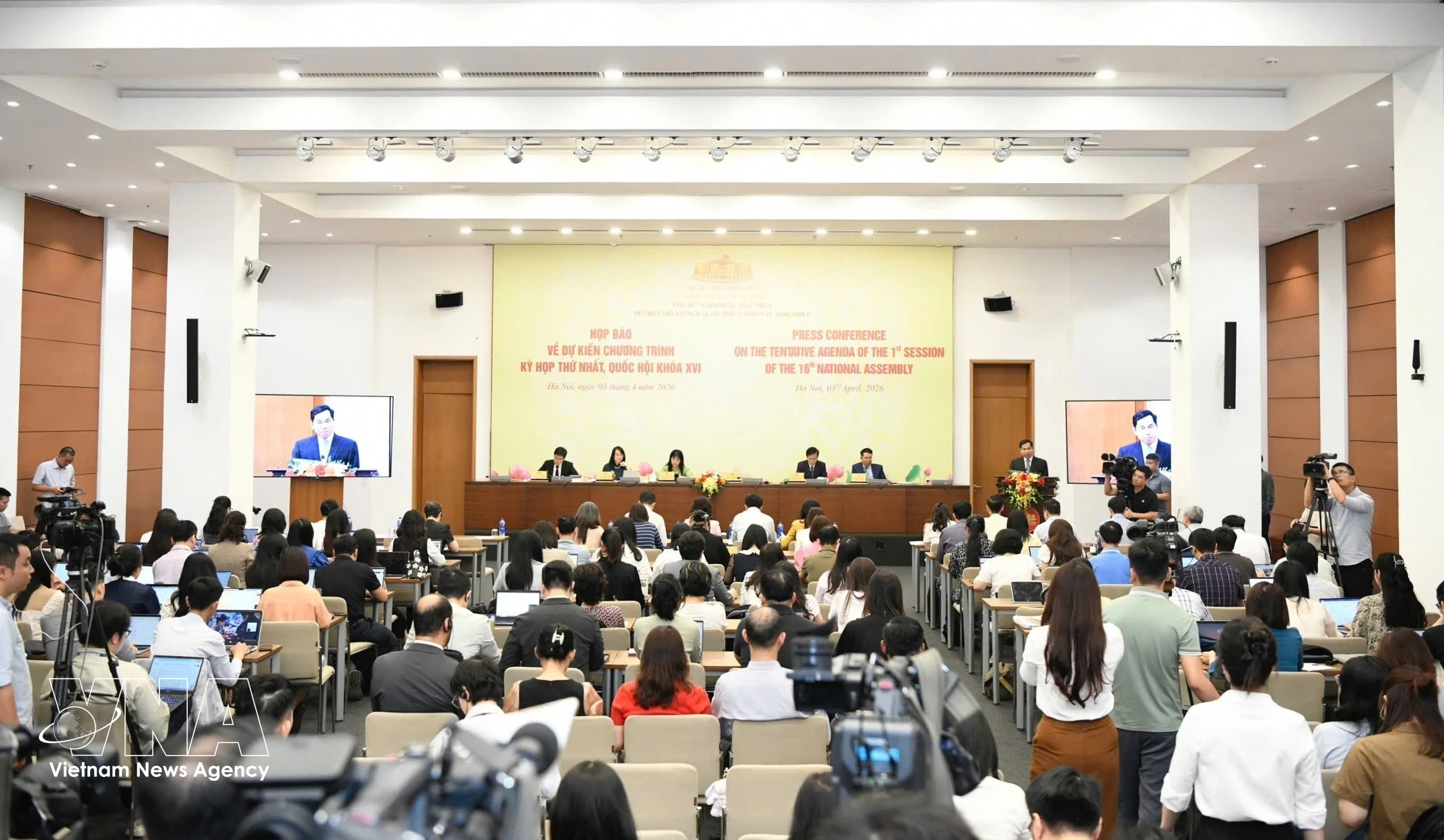
Hanoi (VNA) – The 16th National Assembly (NA) will consider key personnel matters at its first session, including the election of the NA Chairperson, State President, and Prime Minister, said Vice Chairman of the NA Office Nguyen Van Hien at a press briefing in Hanoi on April 3.
During the session, deputies will also elect Vice State President, Vice Chairpersons of the NA, members of the NA Standing Committee, Chief Justice of the Supreme People’s Court, Procurator General of the Supreme People’s Procuracy, and approve the appointments of Deputy Prime Ministers, ministers and other Government members, as well as members of the National Defence and Security Council, said the official.
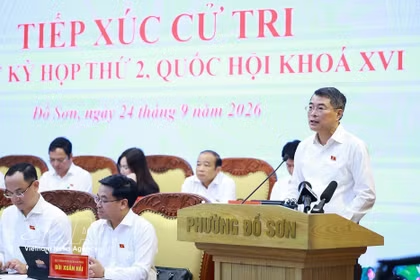
Regarding the legislature’s operational orientations for the next five years, NA General Secretary and Chairman of the NA Office Le Quang Manh said the election of deputies to the 16th NA and People’s Councils at all levels for the 2026–2031 tenure took place amid strong national transformation following the success of the 14th National Party Congress.
More than 76 million voters went to the polls, representing a turnout of 99.7% - the largest-scale election and highest voter participation rate ever recorded. All 500 NA deputies and nearly all People’s Council members were elected, demonstrating broad public confidence as the country enters a new development phase, he stressed.
The first session will mark the beginning of the new tenure and set overall orientations for parliamentary activities over the next five years. It is an important milestone in advancing institutional reforms, strengthening supervisory effectiveness, and making key national decisions to meet rapid and sustainable development.
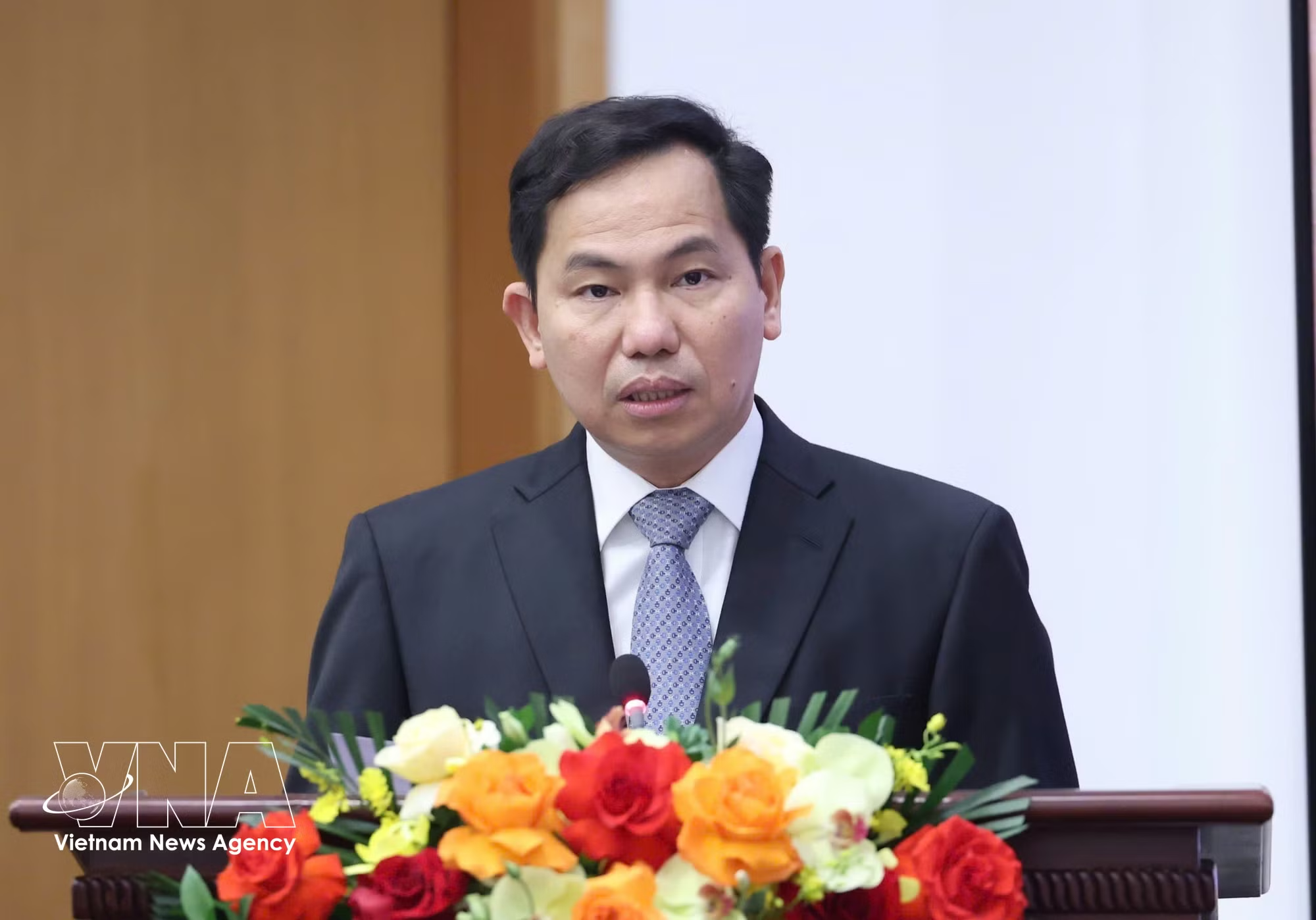
According to the official, one of the major tasks of the new term will be building a more professional and modern legislature, gradually operating on digital platforms across legislative processes, discussions and voting procedures. The NA will also promote democracy by ensuring public opinion is fully reflected in policymaking.
The session will focus on consolidating the State apparatus, determining socio-economic development orientations for the new tenure, and reviewing major medium-term plans, including the five-year socio-economic development plan, medium-term public investment plan, and national financial and budget plan. Several urgent laws and resolutions aimed at supporting growth will also be considered.
Manh expressed his confidence that press agencies will continue providing timely and professional coverage, promoting the image of a reform-oriented, action-driven and people-centred legislature. Vice Chairman of the NA Office Nguyen Van Hien said the preparatory meeting will be held on the afternoon of April 5, with the session officially opening on April 6 and expected to conclude on April 23 at the NA House in Hanoi.
The session is scheduled to last about 11 working days in two phases - April 6–12 and April 20–23 - with April 24–25 reserved if necessary.
The NA is expected to deliberate and decide on organisational and personnel matters; eight draft laws and one resolution; five groups of issues relating to socio-economic development, finance, state budget, supervision and other key matters; and nine groups of reports submitted for deputies’ review. Around 2.5 working days will be devoted to personnel decisions.
For urgent issues that need quick action on conclusions and resolutions from competent authorities, the NA Standing Committee has asked the Government to promptly finalise dossiers for possible inclusion in the second phase of the session.
Preparations for the session have been carried out carefully, Hien said, with close coordination among relevant agencies to enhance organisational and service quality.
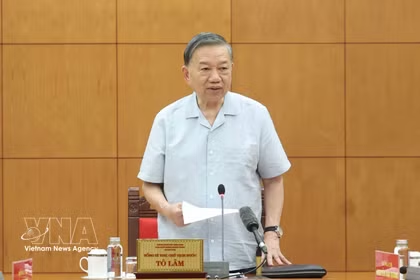
Party General Secretary To Lam will deliver a speech at the opening of the session.
In their legislative work, deputies will review and pass eight draft laws and one resolution. These include amendments to laws on civil status, the Capital, access to information, belief and religion, notarization, overseas representative missions, legal aid, and emulation and commendation. They will also adopt a resolution outlining coordination mechanisms and special policies to enhance the prevention and resolution of international investment disputes.
The session will also review and decide on various socio-economic, financial, budgetary and supervisory issues, along with other important national matters./.