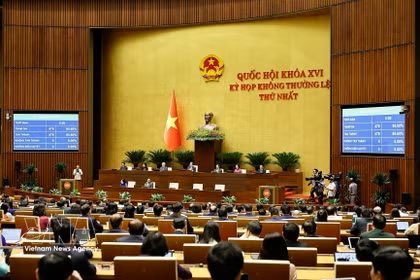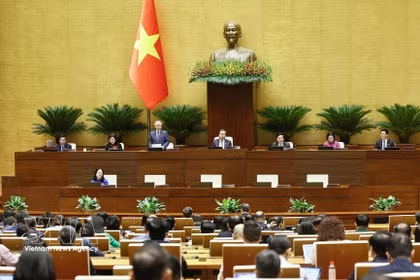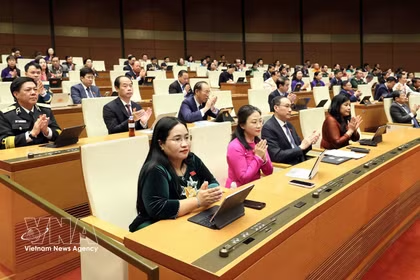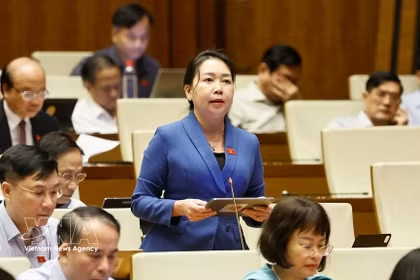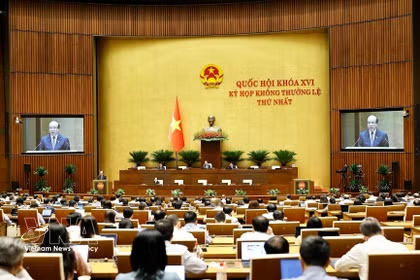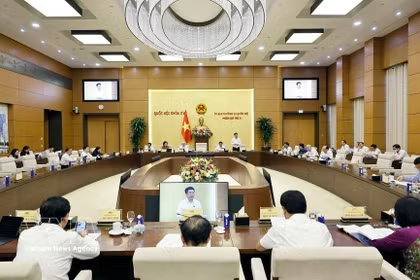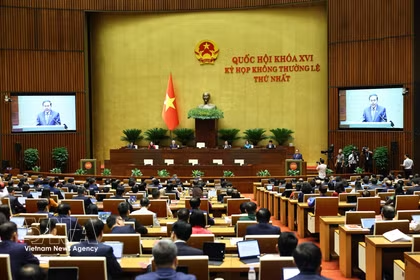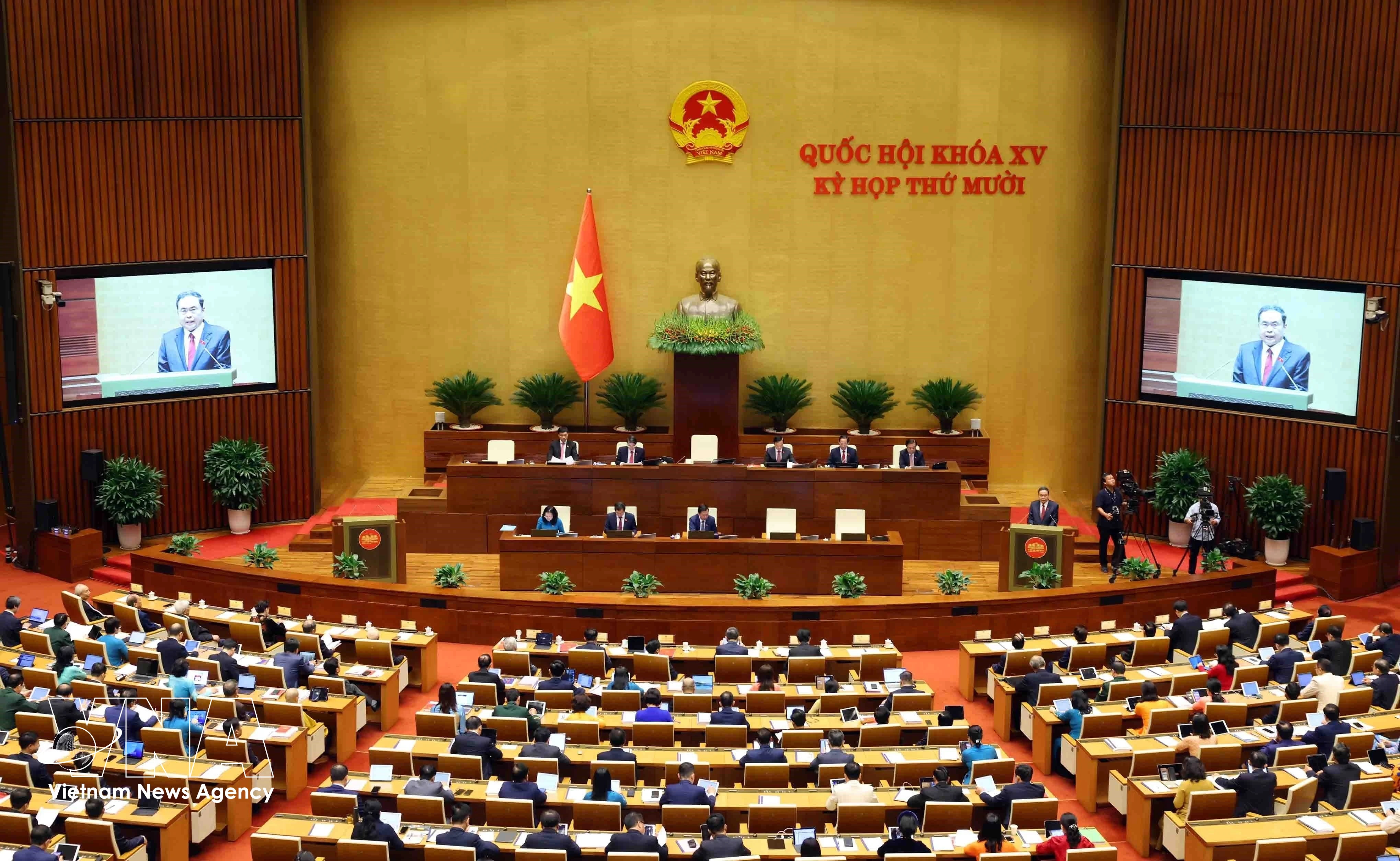
New Delhi (VNA) – Professor Dr. Anmol Mukhia at South Asian University in India has praised the renovation and legislative role of the Vietnamese National Assembly and highlighted the significance of the election of deputies to the NA and People’s Councils at all level for the 2026–2031 tenure.
Professor Mukhia said the 15th NA for the 2021–2026 tenure has been widely recognised for its proactive, reform-oriented and development-facilitating approach rather than a purely administrative role.
He noted that during its tenure, the legislature adopted 51 laws and 39 resolutions aimed at stabilising the national economy after the COVID-19 pandemic, reforming roughly 30% of the legal framework. Eight of the resolutions were normative, focusing on areas such as economic growth, education, healthcare and digital transformation.
The Professor noted that these legislative outcomes helped institutionalise key policy areas ranging from defence, security and justice to economic development and human rights-related issues such as education, healthcare and grievance settlement. Major amendments to the Laws on Education, Higher Education and Vocational Education were also approved, along with policies including free textbooks and a unified education programme, which took effect on January 1, 2026.
The NA has also accelerated digital transformation in its operations, gradually building a modern and digital legislature. Newly adopted laws address emerging sectors such as artificial intelligence, high technology and digital transformation. Meanwhile, Resolution No. 222 on the development of an International Financial Centre provides a legal foundation to enhance Vietnam’s global competitiveness and human resources capacity.
Digital platforms have also been used to collect public feedback on draft laws, attracting hundreds of millions of contributions and improving transparency, efficiency and citizens' participation in the legislative process.
Regarding the decision to hold the election two months earlier than usual, Professor Mukhia described the move as a “second wave of reforms” aimed at quickly consolidating a new leadership apparatus capable of implementing ambitious development goals, including Vietnam’s aspiration to become a developed economy by 2045.
The early consolidation of the NA and People’s Councils, he said, helps avoid governance gaps during a critical transition period, ensuring leadership continuity while accelerating decision-making on priorities such as infrastructure development and economic growth.
He also highlighted that this will be the first election conducted under a streamlined two-tier local administration model, replacing the previous structure that included district-level administration. The new system is expected to enhance governance efficiency and representation as deputies will oversee larger and more complex administrative units. The use of digital platforms for voter verification and information provision also helps streamline procedures and improve efficiency.
According to Professor Mukhia, deputies in the next tenure will face higher expectations, requiring strong political credentials, professional expertise and digital skills. Lawmakers are expected to demonstrate integrity, effectiveness and readiness to take responsibility while serving as genuine representatives of the people and bridging policy with local realities.
Under the Resolution of the 14th National Party Congress, the NA and People’s Councils will prioritise institutionalising the Party's guidelines and building a modern, high-quality legal framework to support rapid development. Key tasks include removing bottlenecks in land, administrative and investment regulations, strengthening policy implementation oversight, and advancing socio-economic goals for 2026–2030 such as sustaining high growth, promoting green transition, achieving carbon neutrality by 2050 and reducing multidimensional poverty to below 1%.
On international parliamentary cooperation, Professor Mukhia emphasised the importance of regular high-level exchanges and deeper legislative dialogue on security and economic issues amid global uncertainties. He suggested Vietnam and India further strengthen cooperation in defence, technology and parliamentary friendship activities while making greater use of multilateral platforms such as the Inter-Parliamentary Union (IPU).
He noted that Vietnam–India parliamentary relations remain strong, built on the Comprehensive Strategic Partnership established in 2016 and guided by a shared vision of “three Ps” - Peace, Prosperity and People. The partnership aligns with India’s Act East Policy and Indo-Pacific vision and is supported by the 2024–2028 Action Plan focusing on economic, defence, security and digital connectivity cooperation.
In addition, people-to-people exchanges and cultural initiatives, including activities of the Swami Vivekananda Indian Cultural Centre in Hanoi, continue to enhance mutual understanding and friendship between the two countries, he added./.