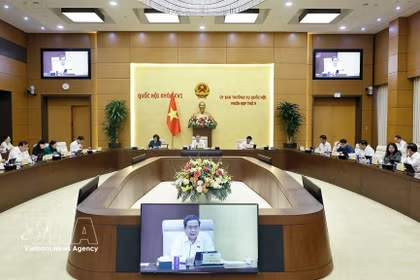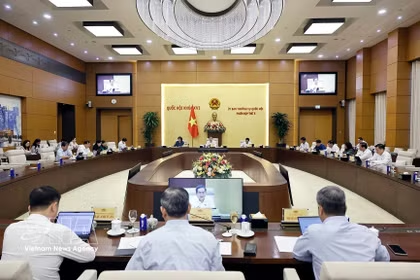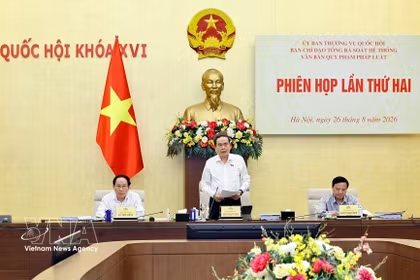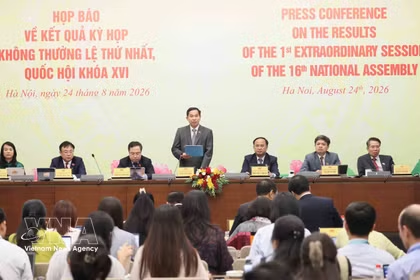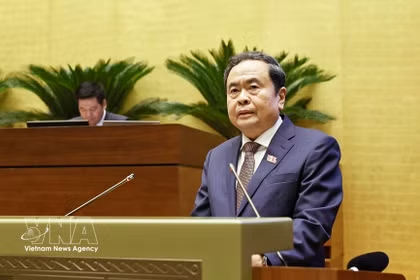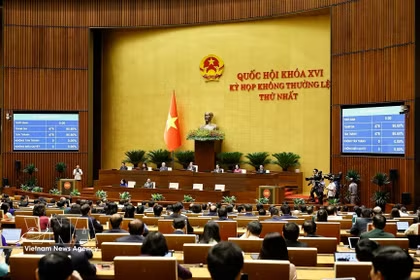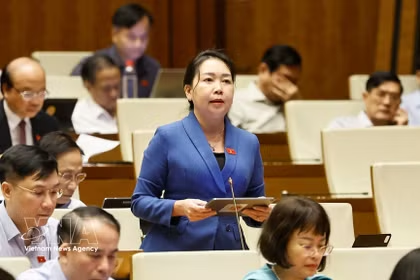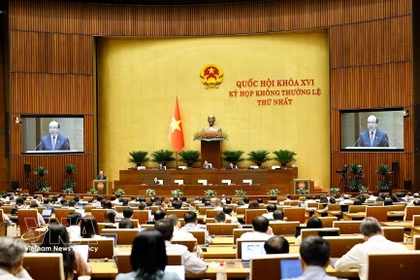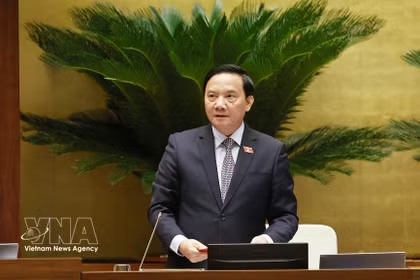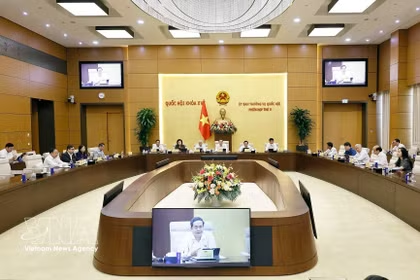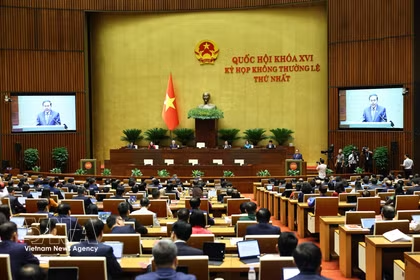
Hanoi (VNA) – The National Assembly (NA) on April 24 morning adopted a resolution setting out a goal of achieving rapid and sustainable national development, with average GDP growth of at least 10% per year in the next five years, while maintaining macroeconomic stability, controlling inflation, ensuring major economic balances, and comprehensively improving living standards.
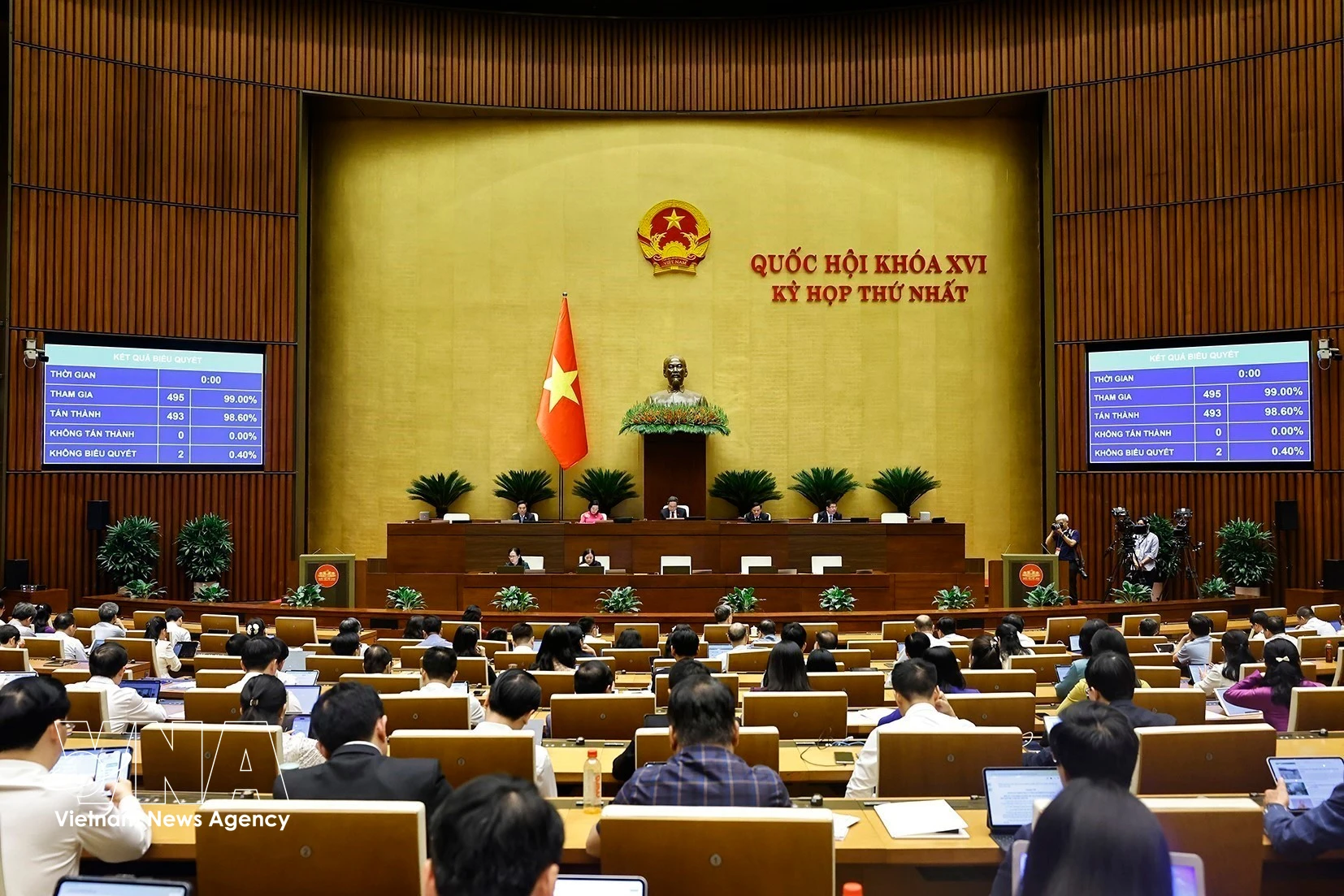
The resolution on the socio-economic development plan in the 2026-2030 period was passed on the last day of the first session of the 16th NA (NA), with 494 out of 494 deputies present voting in favour, representing 100% approval among those in attendance and 98.9% of all NA deputies.
The resolution also sets a target for Vietnam to become, by 2030, a developing country with modern industry and upper-middle income status, ranking among the world’s 30 largest economies by GDP.
The resolution outlines the creation of modern, sustainable development institutions; a synchronised infrastructure network; and enhanced capacity in science, technology, innovation and digital transformation, alongside improvements in workforce quality.
It further emphasises the comprehensive development of Vietnamese culture and people, environmental protection and climate resilience, and the building of a democratic, equitable, disciplined and safe society.
National defence and security are to be firmly ensured, while Vietnam’s international standing and reputation are to be elevated.
Key socio-economic targets include achieving GDP per capita of 8,500 USD by 2030, and raising average life expectancy to 75.5 years.
The resolution also aims to reduce the multidimensional poverty rate by 1-1.5 percentage points per year, achieve universal health insurance coverage, and increase forest coverage to 42%.
Major tasks include institutional reforms, innovation-driven growth, digital transformation, infrastructure development, environmental protection, and strengthening national defence and international integration.
Also the same day, the legislature also passed a resolution on the national financial plan and public debt management for 2026–2030.
The plan aims to build a transparent, efficient and sustainable national financial system, with fiscal policy playing a proactive role in supporting growth while ensuring macroeconomic stability. It emphasises restructuring the state budget, maintaining the central budget’s leading role while enhancing local autonomy, and mobilising resources for strategic breakthroughs and social welfare.
Total state budget revenue for the period is projected at about 16.4 quadrillion VND (623 billion USD), with revenue mobilisation averaging 18% of GDP. Domestic revenue is expected to account for 87–88% of total collections.
Total expenditure is estimated at around 21.2 quadrillion VND, with the budget deficit averaging about 5% of GDP. Public debt safety will be maintained within prescribed ceilings, alongside strengthened fiscal discipline, thrift and anti-waste measures.
A resolution on the medium-term public investment plan for 2026–2030 was also adopted, highlighting public investment as a key driver of economic expansion.
The plan seeks to improve efficiency and maximise the spillover effects of public investment, attracting greater participation from the private sector and accelerating sustainable growth. It underscores the importance of developing modern, synchronised infrastructure systems to support socio-economic development, social welfare and national defence.
Public investment is projected to account for 20–22% of total social investment, with development spending making up about 40% of total state budget expenditure. Authorities aim to disburse over 95% of allocated public investment capital.
The resolution also calls for more focused and selective capital allocation, reducing the number of projects by at least 30% compared to the previous period, while improving management efficiency based on socio-economic impact and public benefit.
Together, the three resolutions form a comprehensive policy framework to drive Vietnam’s development trajectory in the coming five years, with a focus on high growth, sustainability and resilience./.