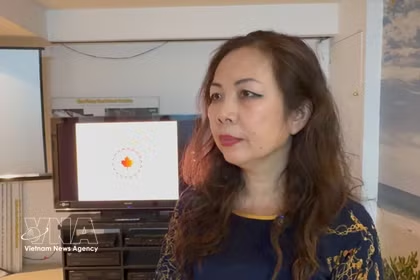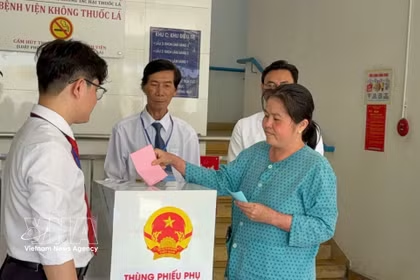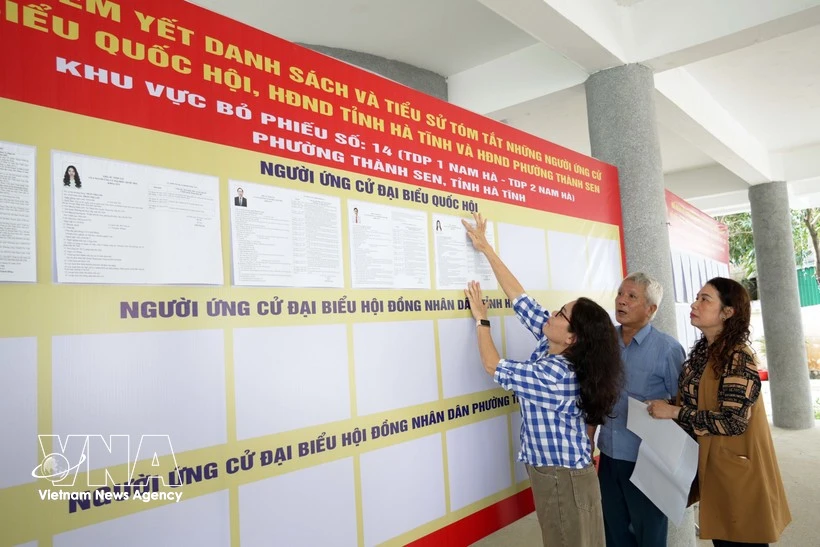
Hanoi (VNA) – The upcoming election of deputies to the 16th National Assembly and People’s Councils at all levels goes beyond choosing people’s representatives but those equipped to drive a revamped governance model, said full-time deputy head of Hai Phong city’s delegation of NA deputies Nguyen Thi Viet Nga.
Ensuring concerted steps
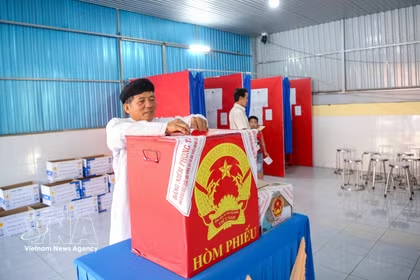
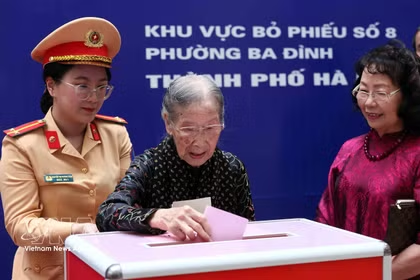
Nga pointed to the most notable change: the Election Day is fixed for March 15, about two months earlier than in prior terms, with results anticipated by March 22. The 16th NA’s first session is slated to convene on April 6 to look into personnel placements and legislative tasks.
The tighter schedule between the 14th National Party Congress, which concluded in January 2026, and the opening sessions of the new-term NA and People's Councils will facilitate smooth personnel realignment, assignment of officials, and swift rollout of the 14th National Party Congress's Resolution and resolutions of congresses at all levels.
Alongside the earlier election date, procedural timelines have been tightened. The gap from the end of candidate nominations to voting day has been cut from 70 days to just 42, designed to simplify processes, heighten proactiveness and accountability across levels, and fast-track digital integration. Adjusted schedules now cover consultation sessions, candidate list disclosures, and the handling of complaints and denunciations.
Flexible campaigning methods
Nga said a noteworthy innovation reflecting the “spirit of the digital age” is the expanded options for voter-candidate interaction. Meetings can take place face-to-face, virtually, or in blended formats, as long as they meet standards for technology, data security, and cybersecurity.
This flexibility widens access to democratic engagement, especially for voters in crowded urban zones or those juggling tight schedules. For candidates, it enables wider outreach, more adaptive dialogue, and faster feedback loops.
A major upgrade lets voters access candidate profiles directly via the VNeID app, eliminating the need for manual searches. Election data will be updated periodically, potentially every two hours, from polling sites to the central system, improving real-time accuracy and easing administrative burdens at the grassroots level. Greater information accessibility empowers voters to review candidates’ biographies, professional backgrounds, and action agendas before voting.
Still, Nga stressed that embracing digital tools requires robust data protection, privacy measures, reliable infrastructure, and targeted assistance for less tech-savvy or disadvantaged groups to prevent exclusion.
Quality of deputies
Nga affirmed that the quality of deputies must hinge on a mix of political integrity, public service ethics, professional competence, social trust, and above all, a true commitment to representing constituents, listening to their concerns, and protecting their legitimate rights and interests.
Balanced representation remains essential, with appropriate shares of full-time lawmakers, women, younger members, ethnic minorities, and voices from varied fields such as academia, labour, agriculture, business, and the arts. Such diversity ensures parliamentary debates capture the full spectrum of socio-economic realities.
Building momentum for new term
Nga expressed her confidence that these reforms will result in election outcomes that truly mirror the people’s will and aspirations, yielding deputies of integrity, capability, and credibility who are bold in thought and action, willing to take responsibility, and deeply connected to citizens.
A successful poll, she said, will establish a solid foundation for the new term, delivering a more capable NA and People’s Council network, proactive delivery of the 14th Party Congress Resolution, and progress toward national breakthroughs via institutional reform, effective governance, national unity, and citizen-centred policies.
With these meticulously designed overhauls, the 2026 election represents a defining political moment for Vietnam – a countrywide celebration of democracy that builds trust and propels forward momentum into the next era of progress./.